
Articles | Volume 389
https://doi.org/10.5194/piahs-389-9-2026
© Author(s) 2026. This work is distributed under
the Creative Commons Attribution 4.0 License.
the Creative Commons Attribution 4.0 License.
https://doi.org/10.5194/piahs-389-9-2026
© Author(s) 2026. This work is distributed under
the Creative Commons Attribution 4.0 License.
the Creative Commons Attribution 4.0 License.
Post-conference publication
| 
06 May 2026
Post-conference publication |
| 06 May 2026
| 06 May 2026
Residual-based hybrid modeling combining GR4J and machine learning for streamflow prediction in data-scarce catchment: case of the Ouémé catchment at Bonou (Benin, West Africa)
Jérôme Enagnon Ahouandjinou
CORRESPONDING AUTHOR

National Institute of Water (INE), Université d'Abomey-Calavi, Abomey-Calavi BP: 526 UAC, Benin
International Chair in Mathematical Physics and Applications (ICMPA-UNESCO Chair), Université d'Abomey-Calavi, Abomey-Calavi BP: 526 UAC, Benin
Aymar Yaovi Bossa
National Institute of Water (INE), Université d'Abomey-Calavi, Abomey-Calavi BP: 526 UAC, Benin
Jean Hounkpe
National Institute of Water (INE), Université d'Abomey-Calavi, Abomey-Calavi BP: 526 UAC, Benin
Related authors
Jérôme Enagnon Ahouandjinou, Aymar Yaovi Bossa, Jean Hounkpè, and Riccardo Taormina
EGUsphere, https://doi.org/10.5194/egusphere-2026-4749, https://doi.org/10.5194/egusphere-2026-4749, 2026
Short summary
Short summary
Floods threaten many West African communities, yet the river data needed to predict them are scarce. We taught a computer model to forecast river flow in Benin by first learning from thousands of rivers worldwide, then adapting it locally. We found that choosing rivers with a similar climate matters more than using many rivers. This offers a low-cost way to improve flood warnings where local measurements are limited.
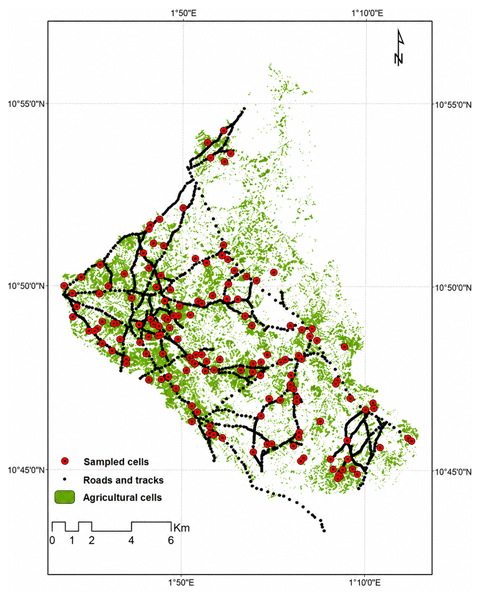
Yaovi Aymar Bossa, Adjo Brigitte Bossa, Yacouba Yira, Kpade Ozias Laurentin Hounkpatin, Octave Djangni, Jean Hounkpè, Hélyette Arielle Odoumbourou, and Ernest Amoussou
Proc. IAHS, 389, 45–54, https://doi.org/10.5194/piahs-389-45-2026, https://doi.org/10.5194/piahs-389-45-2026, 2026
Short summary
Short summary
This study mapped key differences across the landscape and linked them to farmers’ costs and incomes. By combining satellite information with field data on soils and harvests, the researchers showed that natural variation in land conditions leads to higher labor and input needs in some areas. The results help improve decisions that support more sustainable farming and fairer outcomes for farmers.
Jérôme Enagnon Ahouandjinou, Aymar Yaovi Bossa, Jean Hounkpè, and Riccardo Taormina
EGUsphere, https://doi.org/10.5194/egusphere-2026-4749, https://doi.org/10.5194/egusphere-2026-4749, 2026
Short summary
Short summary
Floods threaten many West African communities, yet the river data needed to predict them are scarce. We taught a computer model to forecast river flow in Benin by first learning from thousands of rivers worldwide, then adapting it locally. We found that choosing rivers with a similar climate matters more than using many rivers. This offers a low-cost way to improve flood warnings where local measurements are limited.
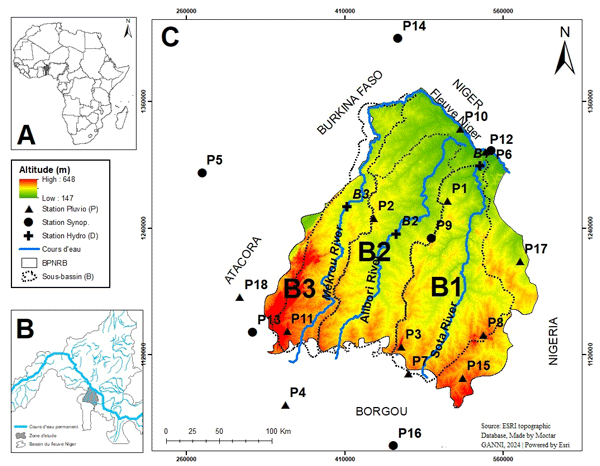
Orou Moctar Ganni Mampo, Kossi François Guedje, Ezéchiel Obada, Halissou Yarou, Bruno Merz, Ravi Kumar Guntu, Jean Hounkpe, and Adéchina Eric Alamou
Proc. IAHS, 388, 33–41, https://doi.org/10.5194/piahs-388-33-2026, https://doi.org/10.5194/piahs-388-33-2026, 2026
Short summary
Short summary
This study explored how droughts have evolved over time in northern Benin, a region that relies heavily on rainfall for farming. By analyzing rainfall and river flow patterns, the research found that while conditions improved after major droughts in the 1970s and 1980s, recent years have seen longer dry spells and worsening water shortages. These results can inform better planning for farming and water use in a changing climate.
Rene Bodjrenou, Luc Ollivier Sintondji, Yekambessun M’Po N’Tcha, Diane Germain, Francis Esse Azonwade, Aymar Yaovi Bossa, Silvère Fernand Sohindji, Gilbert Hounnou, Edid Amouzouvi, and Arthur Freud Segnon Kpognin
Hydrol. Earth Syst. Sci. Discuss., https://doi.org/10.5194/hess-2023-311, https://doi.org/10.5194/hess-2023-311, 2024
Preprint withdrawn
Short summary
Short summary
This study assessed ERA5 reanalysis on runoff, evapotranspiration, water table depth, and soil water content over the Benin basins at spatial scale and monthly time scale. The results showed that the reanalysis simulates well the peaks of mean runoff. It showed the best performance in terms of correlation (>0.50) for runoff, SWC, and ETR. But, the correlations were below 0.5 on the reanalysis for WTD with slight overestimation.
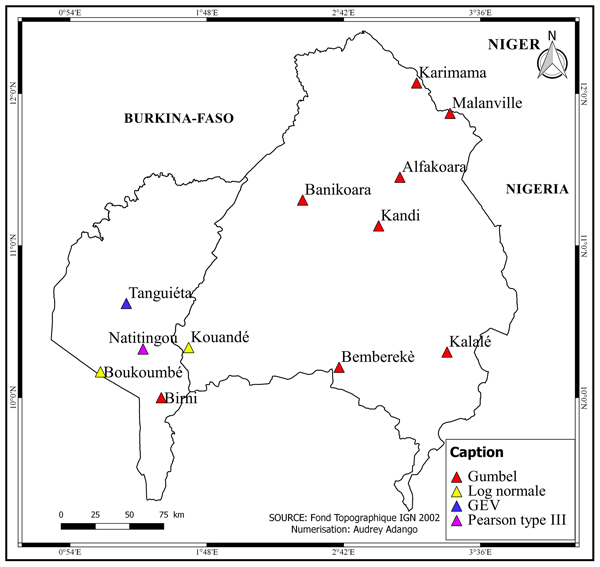
Djigbo Félicien Badou, Audrey Adango, Jean Hounkpè, Aymar Bossa, Yacouba Yira, Eliezer Iboukoun Biao, Julien Adounkpè, Eric Alamou, Luc Ollivier C. Sintondji, and Abel Akambi Afouda
Proc. IAHS, 384, 187–194, https://doi.org/10.5194/piahs-384-187-2021, https://doi.org/10.5194/piahs-384-187-2021, 2021
Short summary
Short summary
Knowledge of rainfall statistical behaviour is a prerequisite to designing rainwater drainage facilities. In West Africa, most practitioners use the Gumbel distribution regardless of rainfall statistical behaviour. This study quantifies biases induced by the use of the Gumbel distribution. It was found that the use of the Gumbel distribution instead of appropriate distributions leads to an underestimation (−45.9 %) of annual daily rainfall maxima and thus to an uncertain design of facilities.
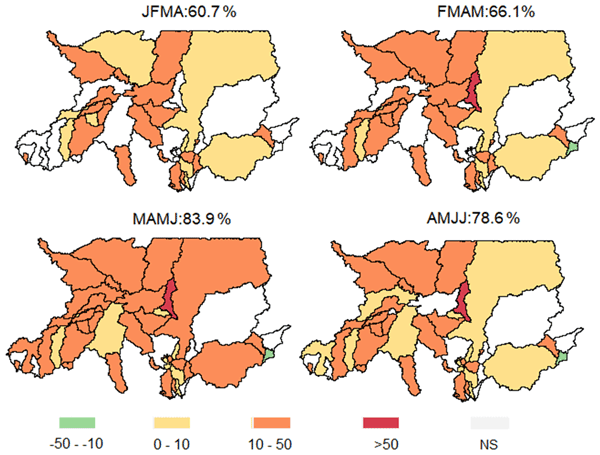
Jean Hounkpè, Djigbo F. Badou, Aymar Y. Bossa, Yacouba Yira, Julien Adounkpè, Eric A. Alamou, Emmanuel A. Lawin, Luc O. C. Sintondji, Abel A. Afouda, and Ernest Amoussou
Proc. IAHS, 384, 219–224, https://doi.org/10.5194/piahs-384-219-2021, https://doi.org/10.5194/piahs-384-219-2021, 2021
Short summary
Short summary
Floods are natural disasters that widely affect people, goods, and ecosystems. Some efforts have been made in predicting floods at a short-term range. However, the usefulness of flood prediction increases as the time lead increases. This work investigated covariates useful for flood prediction several months ahead. Very good relationships were found between flood discharge and some climate indexes which could serve as a basis for seasonal flood forecasting in West Africa.
Yacouba Yira, Tariro Cynthia Mutsindikwa, Aymar Yaovi Bossa, Jean Hounkpè, and Seyni Salack
Proc. IAHS, 384, 349–354, https://doi.org/10.5194/piahs-384-349-2021, https://doi.org/10.5194/piahs-384-349-2021, 2021
Short summary
Short summary
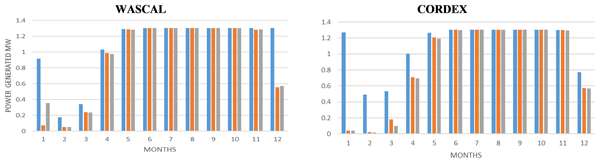
This study evaluates the impact of future climate change on the hydropower generation potential of the Bamboi catchment (Black Volta). The results indicate a projected mean annual precipitation increase while a decrease of hydropower generation is expected.
Yacouba Yira, Aymar Yaovi Bossa, Ernest Amoussou, Djigbo Félicien Badou, Jean Hounkpè, and Kpade Ozias Laurentin Hounkpatin
Proc. IAHS, 384, 275–281, https://doi.org/10.5194/piahs-384-275-2021, https://doi.org/10.5194/piahs-384-275-2021, 2021
Short summary
Short summary
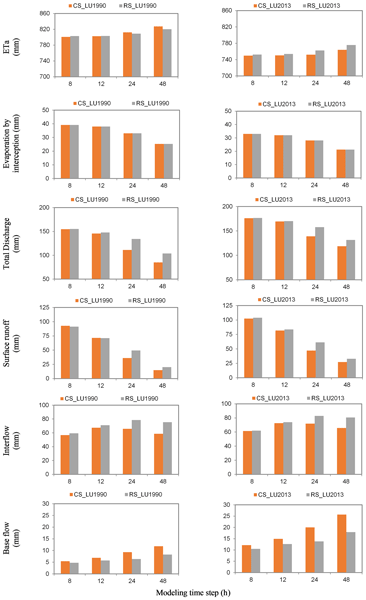
This study addresses the importance of integrating the effect of land use on soil infiltration rate into land use change impact modeling. Based on field measurements; soil parameterization is computed in a hydrological model using a refined soil map integrating land use change impact of soil infiltration rate and a classic soil map not considering this interaction. The results show that integrating land use related effects on soil properties renders LULC change scenarios more plausible.
Cited articles
Afféwé, D. J., Merk, F., Bodjrènou, M., Rauch, M., Usman, M. N., Hounkpè, J., Bliefernicht, J. G., Akpo, A. B., Disse, M., and Adounkpè, J.: Impact of Precipitation Uncertainty on Flood Hazard Assessment in the Oueme River Basin, Hydrology, https://doi.org/10.3390/hydrology12060138, 2025.
Amoussou, E., Awoye, H., Vodounon, H. S. T., Obahoundje, S., Camberlin, P., Diedhiou, A., Kouadio, K., Mahé, G., Houndénou, C., and Boko, M.: Climate and Extreme Rainfall Events in the Mono River Basin (West Africa): Investigating Future Changes with Regional Climate Models, Water 2020, Vol. 12, 12, https://doi.org/10.3390/W12030833, 2020.
Biao, E. I., Alamou, E. A., and Afouda, A.: Improving rainfall–runoff modelling through the control of uncertainties under increasing climate variability in the Ouémé River basin (Benin, West Africa), Hydrol. Sci. J., 61, 2902–2915, https://doi.org/10.1080/02626667.2016.1164315, 2016.
Breiman, L.: Random forests, Mach. Learn., 45, 5–32, https://doi.org/10.1023/A:1010933404324, 2001.
Chen, T. and Guestrin, C.: XGBoost: A scalable tree boosting system, Proceedings of the ACM SIGKDD International Conference on Knowledge Discovery and Data Mining, 13–17-August-2016, 785–794, https://doi.org/10.1145/2939672.2939785, 2016.
Hochreiter, S. and Schmidhuber, J.: Long Short-Term Memory, Neural Comput., 9, 1735–1780, https://doi.org/10.1162/NECO.1997.9.8.1735, 1997.
Houngue, R.: Climate Change Impacts on Hydrodynamic Functioning of Ouémé Delta (Benon), PhD thesis, WASCAL, Université d'Abomey-Calavi, Benin, https://www.researchgate.net/publication/345798176 (last access: 30 April 2026), 2020.
Immerzeel, W. W., Wanders, N., Lutz, A. F., Shea, J. M., and Bierkens, M. F. P.: Reconciling high-altitude precipitation in the upper Indus basin with glacier mass balances and runoff, Hydrol. Earth Syst. Sci., 19, 4673–4687, https://doi.org/10.5194/hess-19-4673-2015, 2015.
Janjić, J. and Tadić, L.: Fields of Application of SWAT Hydrological Model-A Review, Earth 2023, 4, 331–344, https://doi.org/10.3390/earth4020018, 2023.
Japhet Kodja, D., Mahé, G., Amoussou, E., Boko, M., Paturel Assessment, J., and Emmanuel Paturel, J.: Assessment of the Performance of Rainfall-Runoff Model GR4J to Simulate Streamflow in Ouémé Watershed at Bonou's outlet (West Africa, https://doi.org/10.20944/preprints201803.0090.v1, 2018.
Khandelwal, U., Fan, A., Jurafsky, D., Zettlemoyer, L., and Lewis, M.: Nearest neighbor machine translation, arXiv preprint, https://doi.org/10.48550/arXiv.2010.00710, 2020.
Kumanlioglu, A. A. and Fistikoglu, O.: Performance enhancement of a conceptual hydrological model by integrating artificial intelligence, J. Hydrol. Eng., 24, https://doi.org/10.1061/(ASCE)HE.1943-5584.0001850, 2019.
Li, X., Xu, W., Ren, M., Jiang, Y., and Fu, G.: Hybrid CNN-LSTM models for river flow prediction, Water Supply, 22, 4902–4920, https://doi.org/10.2166/WS.2022.170, 2022.
Muñoz-Sabater, J., Dutra, E., Agustí-Panareda, A., Albergel, C., Arduini, G., Balsamo, G., Boussetta, S., Choulga, M., Harrigan, S., Hersbach, H., Martens, B., Miralles, D. G., Piles, M., Rodríguez-Fernández, N. J., Zsoter, E., Buontempo, C., and Thépaut, J.-N.: ERA5-Land: a state-of-the-art global reanalysis dataset for land applications, Earth Syst. Sci. Data, 13, 4349–4383, https://doi.org/10.5194/essd-13-4349-2021, 2021.
Nevo, S., Morin, E., Gerzi Rosenthal, A., Metzger, A., Barshai, C., Weitzner, D., Voloshin, D., Kratzert, F., Elidan, G., Dror, G., Begelman, G., Nearing, G., Shalev, G., Noga, H., Shavitt, I., Yuklea, L., Royz, M., Giladi, N., Peled Levi, N., Reich, O., Gilon, O., Maor, R., Timnat, S., Shechter, T., Anisimov, V., Gigi, Y., Levin, Y., Moshe, Z., Ben-Haim, Z., Hassidim, A., and Matias, Y.: Flood forecasting with machine learning models in an operational framework, Hydrol. Earth Syst. Sci., 26, 4013–4032, https://doi.org/10.5194/hess-26-4013-2022, 2022.
Obada, E., Biao, E. I., Zohou, P. J., Yarou, H., Hounnondaho, F. Z., and Alamou, E. A.: Using machine learning and satellite data to improve flood forecasting: the case of the Ouémé basin at the Bétérou outlet, Hydrol. Res., 56, 153–166, https://doi.org/10.2166/NH.2025.133, 2025.
Perrin, C., Michel, C., and Andréassian, V.: Improvement of a parsimonious model for streamflow simulation, J. Hydrol. (Amst)., 279, 275–289, https://doi.org/10.1016/S0022-1694(03)00225-7, 2003.
Shen, C.: A Transdisciplinary Review of Deep Learning Research and Its Relevance for Water Resources Scientists, Water Resour. Res., 54, 8558–8593, https://doi.org/10.1029/2018WR022643, 2018.
Shen, C. and Lawson, K.: Applications of deep learning in hydrology, Deep Learning for the Earth Sciences: A Comprehensive Approach to Remote Sensing, Climate Sci. Geosci., 285–297, https://doi.org/10.1002/9781119646181.CH19, 2021.
Yang, J., Chen, F., Long, A., Sun, H., He, C., and Liu, B.: Runoff simulation of the Kaidu River Basin based on the GR4J-6 and GR4J-6-LSTM models, J. Hydrol. Reg. Stud., 56, 102034, https://doi.org/10.1016/j.ejrh.2024.102034, 2024.
Zhang, L., Wang, B., Yuan, X., and Liang, P.: Remaining Useful Life Prediction via Improved CNN, GRU and Residual Attention Mechanism With Soft Thresholding, IEEE Sens. J., 22, 15178–15190, https://doi.org/10.1109/JSEN.2022.3185161, 2022.
Zohou, P., Eliézer, B., John, A. and Oscar, H.: Modeling River Discharge using Deep Learning in the Ouémé catchment at Savè outlet (Benin, West Africa), IJGGS, 10, 29–35, https://doi.org/10.14445/23939206/IJGGS-V10I1P103, 2023.
Short summary
This study aims to improve river flow prediction in a region where hydrological data are limited, which is essential for water management and flood preparedness. We combined a traditional rainfall–runoff model with data-driven learning methods to correct systematic simulation errors. Results show that the combined approach predicts river flow more accurately than the traditional model alone. These findings highlight a practical way to improve water resource planning in data-limited regions.
This study aims to improve river flow prediction in a region where hydrological data are...


