
Articles | Volume 388
https://doi.org/10.5194/piahs-388-33-2026
© Author(s) 2026. This work is distributed under
the Creative Commons Attribution 4.0 License.
the Creative Commons Attribution 4.0 License.
https://doi.org/10.5194/piahs-388-33-2026
© Author(s) 2026. This work is distributed under
the Creative Commons Attribution 4.0 License.
the Creative Commons Attribution 4.0 License.
Post-conference publication
| 
28 Apr 2026
Post-conference publication |
| 28 Apr 2026
| 28 Apr 2026
Spatiotemporal analysis of meteorological and hydrological droughts across the Beninese part of the Niger River Basin (West Africa)
Orou Moctar Ganni Mampo
CORRESPONDING AUTHOR

Graduate Research Programme on Climate Change and Water Resources (GRP CCWR), West African Science Service Centre on Climate Change and Adapted Land, Use (WASCAL), Universite d'Abomey Calavi, Cotonou 03 BP 526, Benin
Laboratory of Applied Hydrology, National Water Institute, University of Abomey-Calavi, Abomey-Calavi BP 2549, Benin
Kossi François Guedje
Laboratoire de Physique de l'Atmosphère (LPA) de l'Université d'Abomey-Calavi (UAC), Abomey-Calavi, Bénin
Ezéchiel Obada
Laboratoire de Géoscience de l'Environnement et Application (LaGEA/UNSTIM), Abomey, Benin
Laboratory of Applied Hydrology, National Water Institute, University of Abomey-Calavi, Abomey-Calavi BP 2549, Benin
Halissou Yarou
Laboratoire de Géoscience de l'Environnement et Application (LaGEA/UNSTIM), Abomey, Benin
Laboratory of Applied Hydrology, National Water Institute, University of Abomey-Calavi, Abomey-Calavi BP 2549, Benin
Bruno Merz
Section 4.4: Hydrology, GFZ German Research Centre for Geosciences, Potsdam 14473, Germany
Institute of Environmental Sciences and Geography, University of Potsdam, Germany
Ravi Kumar Guntu
Section 4.4: Hydrology, GFZ German Research Centre for Geosciences, Potsdam 14473, Germany
Jean Hounkpe
Graduate Research Programme on Climate Change and Water Resources (GRP CCWR), West African Science Service Centre on Climate Change and Adapted Land, Use (WASCAL), Universite d'Abomey Calavi, Cotonou 03 BP 526, Benin
Laboratory of Applied Hydrology, National Water Institute, University of Abomey-Calavi, Abomey-Calavi BP 2549, Benin
Adéchina Eric Alamou
Laboratoire de Géoscience de l'Environnement et Application (LaGEA/UNSTIM), Abomey, Benin
Laboratory of Applied Hydrology, National Water Institute, University of Abomey-Calavi, Abomey-Calavi BP 2549, Benin
Related authors
No articles found.
Kyunghun Kim, Nivedita Sairam, and Bruno Merz
EGUsphere, https://doi.org/10.5194/egusphere-2026-5526, https://doi.org/10.5194/egusphere-2026-5526, 2026
This preprint is open for discussion and under review for Natural Hazards and Earth System Sciences (NHESS).
Short summary
Short summary
While drought is known to worsen wildfires, how severely it expands fire size remains unclear. Analyzing nearly 12 000 South Korean fire records from 2000 to 2024, we quantified drought impacts across different fire scales. We found that drought expands fire spread, driving up to a 13.7-fold increase in burned area for large scale events. These findings show that dry conditions exponentially worsen wildfires, aiding climate policy.
Yaovi Aymar Bossa, Adjo Brigitte Bossa, Yacouba Yira, Kpade Ozias Laurentin Hounkpatin, Octave Djangni, Jean Hounkpè, Hélyette Arielle Odoumbourou, and Ernest Amoussou
Proc. IAHS, 389, 45–54, https://doi.org/10.5194/piahs-389-45-2026, https://doi.org/10.5194/piahs-389-45-2026, 2026
Short summary
Short summary
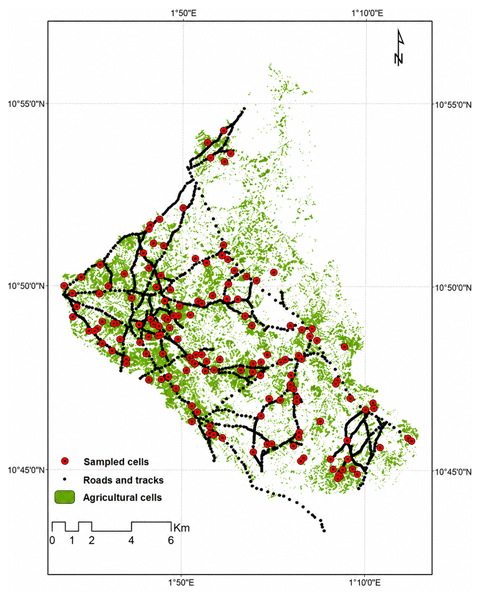
This study mapped key differences across the landscape and linked them to farmers’ costs and incomes. By combining satellite information with field data on soils and harvests, the researchers showed that natural variation in land conditions leads to higher labor and input needs in some areas. The results help improve decisions that support more sustainable farming and fairer outcomes for farmers.
Tarun Sadana, Jeroen C. J. H. Aerts, Dirk Eilander, Bruno Merz, Hans de Moel, Tim Busker, Veerle C. Bril, and Jens de Bruijn
Hydrol. Earth Syst. Sci., 30, 5491–5519, https://doi.org/10.5194/hess-30-5491-2026, https://doi.org/10.5194/hess-30-5491-2026, 2026
Short summary
Short summary
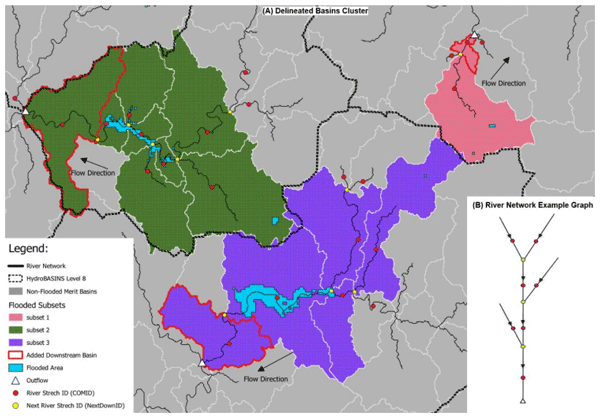
We evaluated the open-source hydrodynamic model SFINCS using satellite data from 499 historical flood events across 96 countries. Our study shows that larger upstream river basins are modelled more accurately, while using observed river gauges and high-resolution elevation data can improve results. Our findings highlight the importance of large-scale validation with satellite data and sensitivity analyses to enhance future global flood hazard assessments and prediction accuracy.
Jérôme Enagnon Ahouandjinou, Aymar Yaovi Bossa, Jean Hounkpè, and Riccardo Taormina
EGUsphere, https://doi.org/10.5194/egusphere-2026-4749, https://doi.org/10.5194/egusphere-2026-4749, 2026
Short summary
Short summary
Floods threaten many West African communities, yet the river data needed to predict them are scarce. We taught a computer model to forecast river flow in Benin by first learning from thousands of rivers worldwide, then adapting it locally. We found that choosing rivers with a similar climate matters more than using many rivers. This offers a low-cost way to improve flood warnings where local measurements are limited.
Marc Lennartz, Benjamin Poschlod, and Bruno Merz
Nat. Hazards Earth Syst. Sci., 26, 3273–3289, https://doi.org/10.5194/nhess-26-3273-2026, https://doi.org/10.5194/nhess-26-3273-2026, 2026
Short summary
Short summary
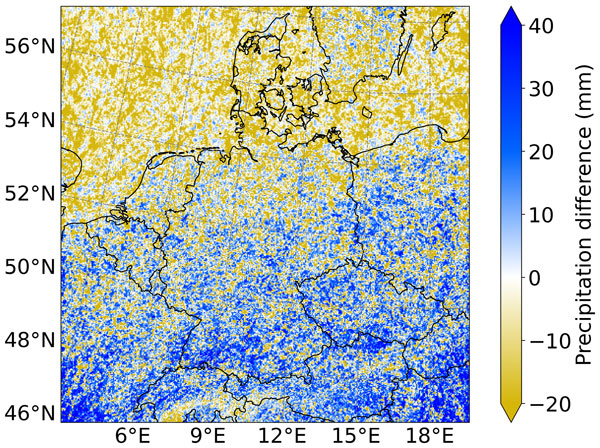
Predicting hourly rainfall extremes under climate change is crucial yet highly uncertain. Using convection-permitting climate model data over Germany, we compare stationary and non-stationary general extreme value (GEV) and simplified metastatistical extreme value (sMEV) methods. We show that the sMEV approach exhibits lower uncertainty across return periods. Moreover, the non-stationary sMEV better captures climate-change-induced changes, though care is needed when projecting future extremes.
Jérôme Enagnon Ahouandjinou, Aymar Yaovi Bossa, and Jean Hounkpe
Proc. IAHS, 389, 9–15, https://doi.org/10.5194/piahs-389-9-2026, https://doi.org/10.5194/piahs-389-9-2026, 2026
Short summary
Short summary
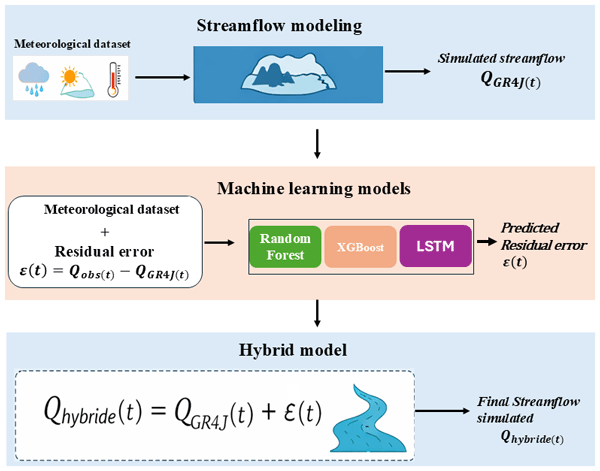
This study aims to improve river flow prediction in a region where hydrological data are limited, which is essential for water management and flood preparedness. We combined a traditional rainfall–runoff model with data-driven learning methods to correct systematic simulation errors. Results show that the combined approach predicts river flow more accurately than the traditional model alone. These findings highlight a practical way to improve water resource planning in data-limited regions.
Ravikumar Guntu, Guilherme Samprogna Mohor, Annegret H. Thieken, Meike Müller, and Heidi Kreibich
Nat. Hazards Earth Syst. Sci., 26, 163–186, https://doi.org/10.5194/nhess-26-163-2026, https://doi.org/10.5194/nhess-26-163-2026, 2026
Short summary
Short summary
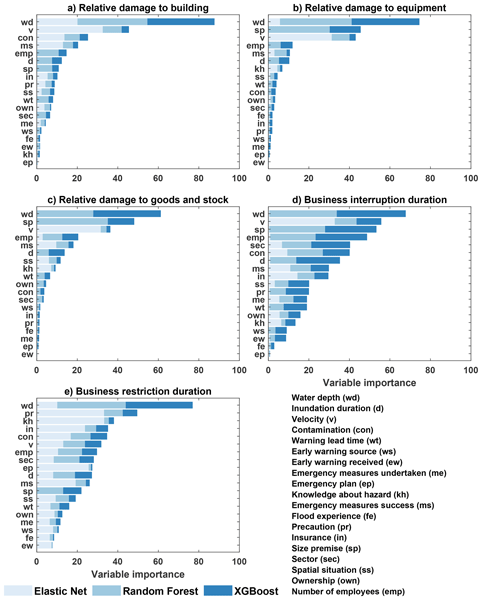
The 2021 flood in Germany caused severe damage to companies, with over half reporting losses above € 100 000. Using probabilistic models, we identify key factors driving direct damage and business interruption. Water depth, flow velocity and company exposure were key factors, but preparedness played a crucial role. Companies that took good precaution recovered faster. Our findings stress the value of early warnings and risk communication to reduce damage from unprecedented flood events.
Apoorva Singh, Ravikumar Guntu, Nivedita Sairam, Kasra Rafiezadeh Shahi, Anna Buch, Melanie Fischer, Chandrika Thulaseedharan Dhanya, and Heidi Kreibich
Nat. Hazards Earth Syst. Sci., 26, 103–118, https://doi.org/10.5194/nhess-26-103-2026, https://doi.org/10.5194/nhess-26-103-2026, 2026
Short summary
Short summary
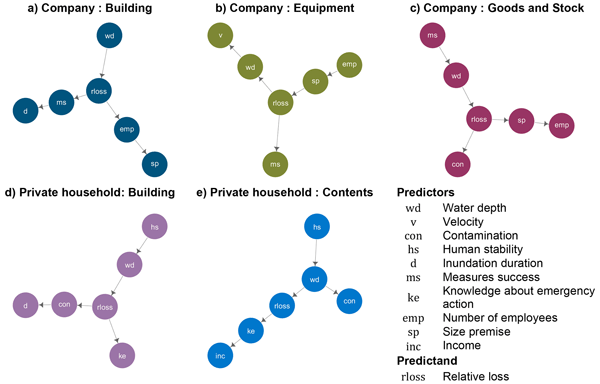
We develop novel probabilistic models to estimate flash flood losses of companies and households in Germany. Using multiple flash flood events, we identify key drivers of flash floods loss. FLEMO flash model reveals that for companies, the effectiveness of emergency measures is crucial in mitigating losses. In contrast, household benefit more from knowledge about emergency action, suggesting adaptation strategies can effectively reduce flash flood losses.
Xiaoxiang Guan, Viet Dung Nguyen, Paul Voit, Bruno Merz, Maik Heistermann, and Sergiy Vorogushyn
Nat. Hazards Earth Syst. Sci., 25, 3075–3086, https://doi.org/10.5194/nhess-25-3075-2025, https://doi.org/10.5194/nhess-25-3075-2025, 2025
Short summary
Short summary
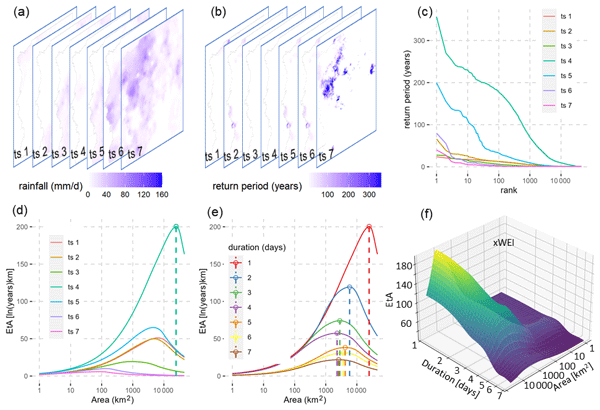
We evaluated a multi-site stochastic regional weather generator (nsRWG) for its ability to capture the cross-scale extremity of heavy-precipitation events (HPEs) in Germany. We generated 100 realizations of 72 years of daily synthetic precipitation data. The performance was assessed using WEI and xWEI indices, which measure event extremity across spatiotemporal scales. The results show that nsRWG simulates the extremity patterns of HPEs well, although it overestimates short-duration small-extent events.
Sergiy Vorogushyn, Li Han, Heiko Apel, Viet Dung Nguyen, Björn Guse, Xiaoxiang Guan, Oldrich Rakovec, Husain Najafi, Luis Samaniego, and Bruno Merz
Nat. Hazards Earth Syst. Sci., 25, 2007–2029, https://doi.org/10.5194/nhess-25-2007-2025, https://doi.org/10.5194/nhess-25-2007-2025, 2025
Short summary
Short summary
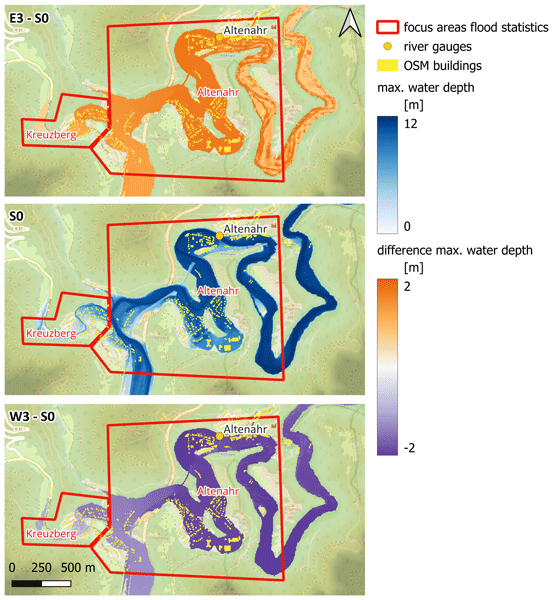
The July 2021 flood in central Europe was one of the deadliest floods in Europe in the recent decades and the most expensive flood in Germany. In this paper, we show that the hydrological impact of this event in the Ahr valley could have been even worse if the rainfall footprint trajectory had been only slightly different. The presented methodology of spatial counterfactuals generates plausible unprecedented events and helps to better prepare for future extreme floods.
Xiaoxiang Guan, Baoying Shan, Viet Dung Nguyen, and Bruno Merz
EGUsphere, https://doi.org/10.5194/egusphere-2025-1509, https://doi.org/10.5194/egusphere-2025-1509, 2025
Preprint archived
Short summary
Short summary
Understanding and predicting extreme floods is crucial for reducing disaster risks, yet existing models struggle with unprecedented events. We tested multiple modeling approaches across 400+ river catchments in Central Europe and found that deep learning models outperform traditional methods but still underestimate extreme floods. Our findings suggest that combining data-driven models with physical knowledge can improve flood predictions, helping communities better prepare for future extremes.
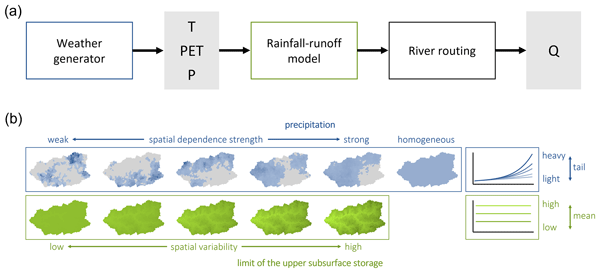
Elena Macdonald, Bruno Merz, Viet Dung Nguyen, and Sergiy Vorogushyn
Hydrol. Earth Syst. Sci., 29, 447–463, https://doi.org/10.5194/hess-29-447-2025, https://doi.org/10.5194/hess-29-447-2025, 2025
Short summary
Short summary
Flood peak distributions indicate how likely the occurrence of an extreme flood is at a certain river. If the distribution has a so-called heavy tail, extreme floods are more likely than might be anticipated. We find heavier tails in small catchments compared to large catchments, and spatially variable rainfall leads to a lower occurrence probability of extreme floods. Spatially variable runoff does not show effects. The results can improve estimations of probabilities of extreme floods.
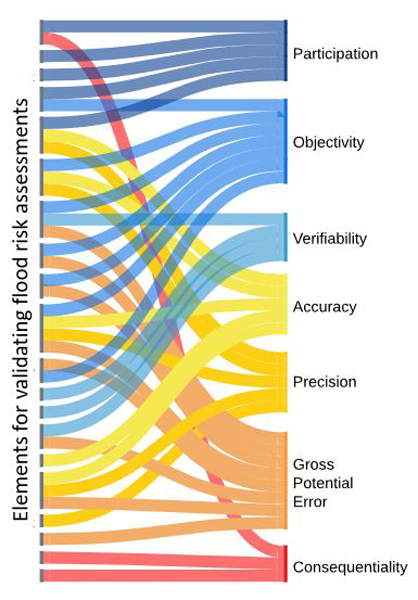
Bruno Merz, Günter Blöschl, Robert Jüpner, Heidi Kreibich, Kai Schröter, and Sergiy Vorogushyn
Nat. Hazards Earth Syst. Sci., 24, 4015–4030, https://doi.org/10.5194/nhess-24-4015-2024, https://doi.org/10.5194/nhess-24-4015-2024, 2024
Short summary
Short summary
Flood risk assessments help us decide how to reduce the risk of flooding. Since these assessments are based on probabilities, it is hard to check their accuracy by comparing them to past data. We suggest a new way to validate these assessments, making sure they are practical for real-life decisions. This approach looks at both the technical details and the real-world situations where decisions are made. We demonstrate its practicality by applying it to flood emergency planning.
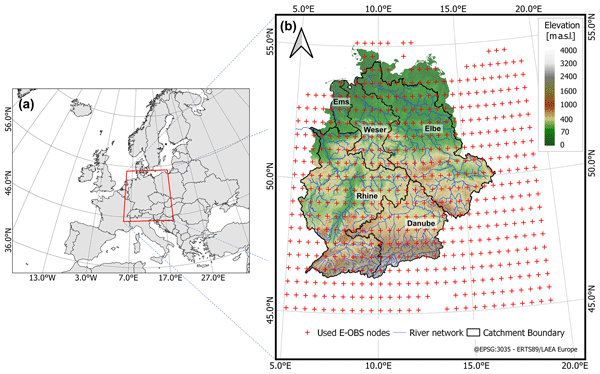
Viet Dung Nguyen, Sergiy Vorogushyn, Katrin Nissen, Lukas Brunner, and Bruno Merz
Adv. Stat. Clim. Meteorol. Oceanogr., 10, 195–216, https://doi.org/10.5194/ascmo-10-195-2024, https://doi.org/10.5194/ascmo-10-195-2024, 2024
Short summary
Short summary
We present a novel stochastic weather generator conditioned on circulation patterns and regional temperature, accounting for dynamic and thermodynamic atmospheric changes. We extensively evaluate the model for the central European region. It statistically downscales precipitation for future periods, generating long, spatially and temporally consistent series. Results suggest an increase in extreme precipitation over the region, offering key benefits for hydrological impact studies.
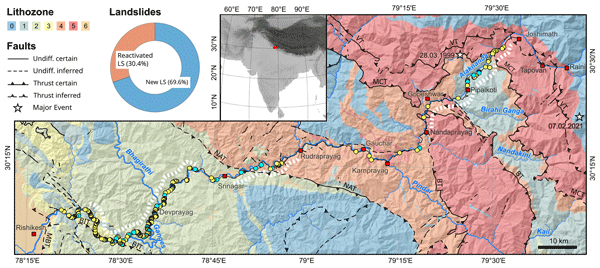
Jürgen Mey, Ravi Kumar Guntu, Alexander Plakias, Igo Silva de Almeida, and Wolfgang Schwanghart
Nat. Hazards Earth Syst. Sci., 24, 3207–3223, https://doi.org/10.5194/nhess-24-3207-2024, https://doi.org/10.5194/nhess-24-3207-2024, 2024
Short summary
Short summary
The Himalayan road network links remote areas, but fragile terrain and poor construction lead to frequent landslides. This study on the NH-7 in India's Uttarakhand region analyzed 300 landslides after heavy rainfall in 2022 . Factors like slope, rainfall, rock type and road work influence landslides. The study's model predicts landslide locations for better road maintenance planning, highlighting the risk from climate change and increased road use.
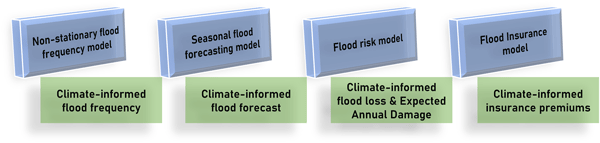
Viet Dung Nguyen, Jeroen Aerts, Max Tesselaar, Wouter Botzen, Heidi Kreibich, Lorenzo Alfieri, and Bruno Merz
Nat. Hazards Earth Syst. Sci., 24, 2923–2937, https://doi.org/10.5194/nhess-24-2923-2024, https://doi.org/10.5194/nhess-24-2923-2024, 2024
Short summary
Short summary
Our study explored how seasonal flood forecasts could enhance insurance premium accuracy. Insurers traditionally rely on historical data, yet climate fluctuations influence flood risk. We employed a method that predicts seasonal floods to adjust premiums accordingly. Our findings showed significant year-to-year variations in flood risk and premiums, underscoring the importance of adaptability. Despite limitations, this research aids insurers in preparing for evolving risks.
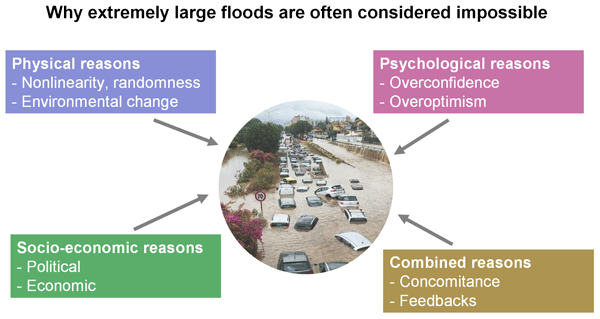
Alberto Montanari, Bruno Merz, and Günter Blöschl
Hydrol. Earth Syst. Sci., 28, 2603–2615, https://doi.org/10.5194/hess-28-2603-2024, https://doi.org/10.5194/hess-28-2603-2024, 2024
Short summary
Short summary
Floods often take communities by surprise, as they are often considered virtually
impossibleyet are an ever-present threat similar to the sword suspended over the head of Damocles in the classical Greek anecdote. We discuss four reasons why extremely large floods carry a risk that is often larger than expected. We provide suggestions for managing the risk of megafloods by calling for a creative exploration of hazard scenarios and communicating the unknown corners of the reality of floods.
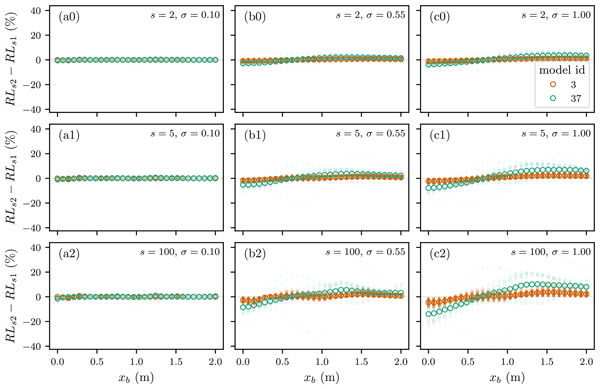
Seth Bryant, Heidi Kreibich, and Bruno Merz
Proc. IAHS, 386, 181–187, https://doi.org/10.5194/piahs-386-181-2024, https://doi.org/10.5194/piahs-386-181-2024, 2024
Short summary
Short summary
Our study found that simplifying data in flood risk models can introduce errors. We tested 344 damage functions and found errors up to 40 % of the total asset value. This means large-scale flood risk assessments may have significant errors due to the modelling approach. Our research highlights the need for more attention to data aggregation in flood risk models.
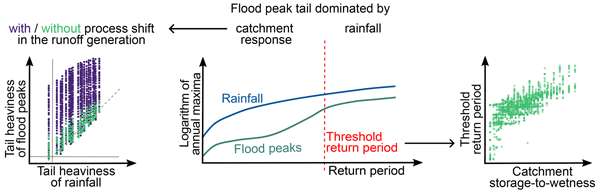
Elena Macdonald, Bruno Merz, Björn Guse, Viet Dung Nguyen, Xiaoxiang Guan, and Sergiy Vorogushyn
Hydrol. Earth Syst. Sci., 28, 833–850, https://doi.org/10.5194/hess-28-833-2024, https://doi.org/10.5194/hess-28-833-2024, 2024
Short summary
Short summary
In some rivers, the occurrence of extreme flood events is more likely than in other rivers – they have heavy-tailed distributions. We find that threshold processes in the runoff generation lead to such a relatively high occurrence probability of extremes. Further, we find that beyond a certain return period, i.e. for rare events, rainfall is often the dominant control compared to runoff generation. Our results can help to improve the estimation of the occurrence probability of extreme floods.
Seth Bryant, Guy Schumann, Heiko Apel, Heidi Kreibich, and Bruno Merz
Hydrol. Earth Syst. Sci., 28, 575–588, https://doi.org/10.5194/hess-28-575-2024, https://doi.org/10.5194/hess-28-575-2024, 2024
Short summary
Short summary
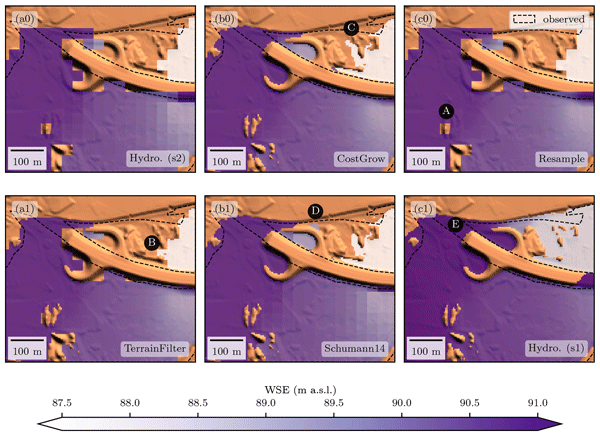
A new algorithm has been developed to quickly produce high-resolution flood maps. It is faster and more accurate than current methods and is available as open-source scripts. This can help communities better prepare for and mitigate flood damages without expensive modelling.
Jürgen Mey, Ravi Kumar Guntu, Alexander Plakias, Igo Silva de Almeida, and Wolfgang Schwanghart
Nat. Hazards Earth Syst. Sci. Discuss., https://doi.org/10.5194/nhess-2022-295, https://doi.org/10.5194/nhess-2022-295, 2023
Manuscript not accepted for further review
Short summary
Short summary
The current socioeconomic development in the Himalayan region leads to a rapid expansion of the road network and an increase in the exposure to landslides. Our study along the NH-7 demonstrates the scale of this challenge as we detect more than one partially or fully road-blocking landslide per road kilometer. We identify the main controlling variables, i.e. slope angle, rainfall amount and lithology. As our approach uses a minimum of data, it can be extended to more complicated road networks.
Heiko Apel, Sergiy Vorogushyn, and Bruno Merz
Nat. Hazards Earth Syst. Sci., 22, 3005–3014, https://doi.org/10.5194/nhess-22-3005-2022, https://doi.org/10.5194/nhess-22-3005-2022, 2022
Short summary
Short summary
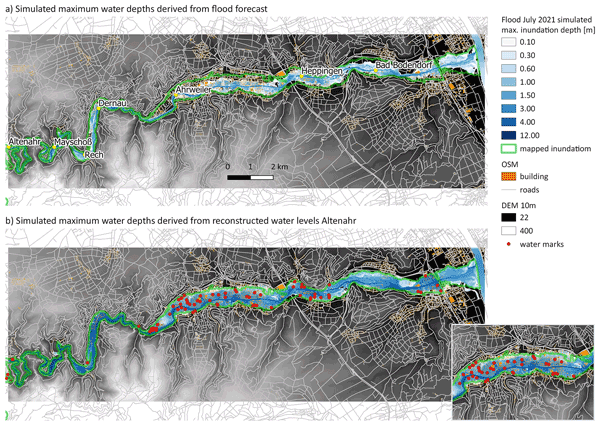
The paper presents a fast 2D hydraulic simulation model for flood propagation that enables operational forecasts of spatially distributed inundation depths, flood extent, flow velocities, and other flood impacts. The detailed spatial forecast of floods and flood impacts is a large step forward from the currently operational forecasts of discharges at selected gauges, thus enabling a more targeted flood management and early warning.
Djigbo Félicien Badou, Audrey Adango, Jean Hounkpè, Aymar Bossa, Yacouba Yira, Eliezer Iboukoun Biao, Julien Adounkpè, Eric Alamou, Luc Ollivier C. Sintondji, and Abel Akambi Afouda
Proc. IAHS, 384, 187–194, https://doi.org/10.5194/piahs-384-187-2021, https://doi.org/10.5194/piahs-384-187-2021, 2021
Short summary
Short summary
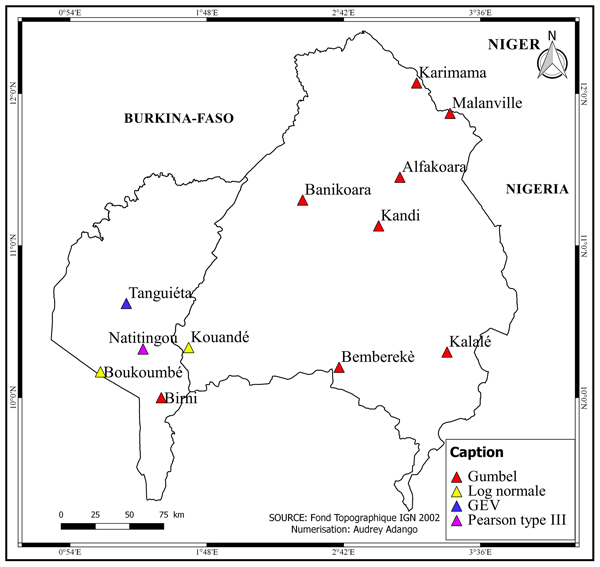
Knowledge of rainfall statistical behaviour is a prerequisite to designing rainwater drainage facilities. In West Africa, most practitioners use the Gumbel distribution regardless of rainfall statistical behaviour. This study quantifies biases induced by the use of the Gumbel distribution. It was found that the use of the Gumbel distribution instead of appropriate distributions leads to an underestimation (−45.9 %) of annual daily rainfall maxima and thus to an uncertain design of facilities.
Esdras Babadjidé Josué Zandagba, Eric Adéchina Alamou, Ezechiel Obada, Amédée Chabi, Eliézer Iboukoun Biao, and Abel Afouda
Proc. IAHS, 384, 93–98, https://doi.org/10.5194/piahs-384-93-2021, https://doi.org/10.5194/piahs-384-93-2021, 2021
Short summary
Short summary
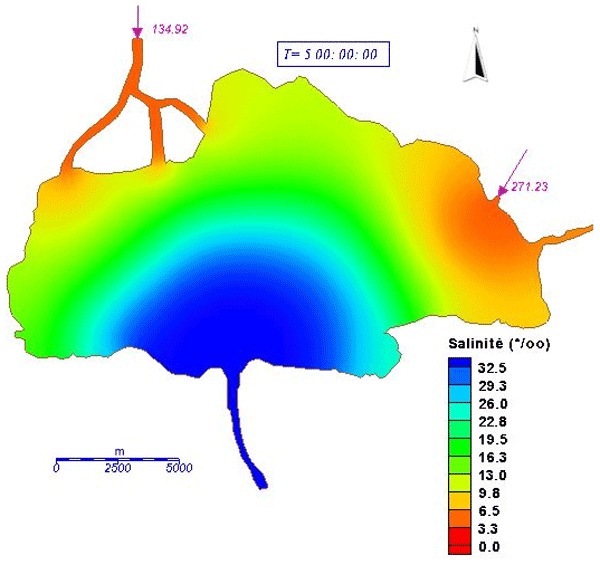
Knowing the concentration of the pollutant field distribution in time and space contributes significantly to the prediction of exceptional phenomena. To this we simulate the transport and dispersion of salt at Nokoue Lagoon. Results showed that in flood period the freshwater inflows produce a net seaward transport, while in low water period the tides lead to periodic seaward and landward transport. Freshwater inflow plays a major role in flood period and tide in low water period on the lagoon.
Eliézer Iboukoun Biao, Ezéchiel Obada, Eric Adéchina Alamou, Josué Esdras Zandagba, Amédée Chabi, Ernest Amoussou, Julien Adounkpe, and Abel Afouda
Proc. IAHS, 384, 57–62, https://doi.org/10.5194/piahs-384-57-2021, https://doi.org/10.5194/piahs-384-57-2021, 2021
Yacouba Yira, Aymar Yaovi Bossa, Ernest Amoussou, Djigbo Félicien Badou, Jean Hounkpè, and Kpade Ozias Laurentin Hounkpatin
Proc. IAHS, 384, 275–281, https://doi.org/10.5194/piahs-384-275-2021, https://doi.org/10.5194/piahs-384-275-2021, 2021
Short summary
Short summary
This study addresses the importance of integrating the effect of land use on soil infiltration rate into land use change impact modeling. Based on field measurements; soil parameterization is computed in a hydrological model using a refined soil map integrating land use change impact of soil infiltration rate and a classic soil map not considering this interaction. The results show that integrating land use related effects on soil properties renders LULC change scenarios more plausible.
Yacouba Yira, Tariro Cynthia Mutsindikwa, Aymar Yaovi Bossa, Jean Hounkpè, and Seyni Salack
Proc. IAHS, 384, 349–354, https://doi.org/10.5194/piahs-384-349-2021, https://doi.org/10.5194/piahs-384-349-2021, 2021
Short summary
Short summary
This study evaluates the impact of future climate change on the hydropower generation potential of the Bamboi catchment (Black Volta). The results indicate a projected mean annual precipitation increase while a decrease of hydropower generation is expected.
Jean Hounkpè, Djigbo F. Badou, Aymar Y. Bossa, Yacouba Yira, Julien Adounkpè, Eric A. Alamou, Emmanuel A. Lawin, Luc O. C. Sintondji, Abel A. Afouda, and Ernest Amoussou
Proc. IAHS, 384, 219–224, https://doi.org/10.5194/piahs-384-219-2021, https://doi.org/10.5194/piahs-384-219-2021, 2021
Short summary
Short summary
Floods are natural disasters that widely affect people, goods, and ecosystems. Some efforts have been made in predicting floods at a short-term range. However, the usefulness of flood prediction increases as the time lead increases. This work investigated covariates useful for flood prediction several months ahead. Very good relationships were found between flood discharge and some climate indexes which could serve as a basis for seasonal flood forecasting in West Africa.
Cited articles
Alamou, A. E., Halissou, Y., Aliou, M. D., Obada, E., Iboukoun, E. B., and Felicien, D. B.: Historical and projected meteorological droughts in the Beninese Niger River Basin, Benin, Int. J. Water Resour. Environ. Eng., 14, 39–54, https://doi.org/10.5897/ijwree2021.1026, 2022.
Alsafadi, K., Al-Ansari, N., Mokhtar, A., Mohammed, S., Elbeltagi, A., Sh Sammen, S., and Bi, S.: An evapotranspiration deficit-based drought index to detect variability of terrestrial carbon productivity in the Middle East, Environ. Res. Lett., 17, https://doi.org/10.1088/1748-9326/ac4765, 2022.
Badou, D. F., Diekkrüger, B., Kapangaziwiri, E., Mbaye, M. L., Yira, Y., Lawin, A. E., Oyerinde, G. T., and Afouda, A.: Modelling blue and green water availability under climate change in the Beninese Basin of the Niger River Basin, West Africa, Hydrol. Process., http://mc.manuscriptcentral.com/hypHydrologicalProcesseshttp://mc.manuscriptcentral.com/hypHydrologicalProcesses (last access: 18 September 2023), 2018.
Badou, D. F., Kapangaziwiri, E., Diekkrüger, B., Hounkpè, J., and Afouda, A.: Evaluation of recent hydro-climatic changes in four tributaries of the Niger River Basin (West Africa), Hydrol. Sci. J., 62, 715–728, https://doi.org/10.1080/02626667.2016.1250898, 2017.
Balliet, R., Saley, M. B., Anowa Eba, E. L., Sorokoby, M. V., N'Guessan Bi, H. V., N'Dri, A. O., Djè, B. K., and Biémi, J.: Évolution Des Extrêmes Pluviométriques Dans La Région Du Gôh (Centre-Ouest De La Côte d'Ivoire), Eur. Sci. J., 12, 74, https://doi.org/10.19044/esj.2016.v12n23p74, 2016.
Dai, A.: Characteristics and trends in various forms of the Palmer Drought Severity Index during 1900–2008, J. Geophys. Res.-Atmos., 116, https://doi.org/10.1029/2010JD015541, 2011.
Fang, W., Huang, S., Huang, Q., Huang, G., Wang, H., Leng, G., and Wang, L.: Identifying drought propagation by simultaneously considering linear and nonlinear dependence in the Wei River basin of the Loess Plateau, China, J. Hydrol., 591, https://doi.org/10.1016/j.jhydrol.2020.125287, 2020.
Gaba, C.: An Ensemble Approach Modelling to Assess Water Resources in the Mékrou Basin, Benin, Hydrology, 3, 22, https://doi.org/10.11648/j.hyd.20150302.11, 2015.
Haile, G. G., Tang, Q., Hosseini-Moghari, S. M., Liu, X., Gebremicael, T. G., Leng, G., Kebede, A., Xu, X., and Yun, X.: Projected Impacts of Climate Change on Drought Patterns Over East Africa, Earth's Future, 8, https://doi.org/10.1029/2020EF001502, 2020.
Halissou, Y., Eric, A. A., Ezéchiel, O., and Eliézer, B. I.: Extreme Temperature Trends in the Beninese Niger River Basin (Benin), Am. J. Clim. Change, 10, 371–385, https://doi.org/10.4236/ajcc.2021.104018, 2021.
Hamed, K. H. and Rao, A. R.: A modified Mann-Kendall trend test for autocorrelated data, J. Hydrol., 204, https://doi.org/10.1016/S0022-1694(97)00125-X, 1998.
Hargreaves, H. G. and Samani, A. Z.: Reference Crop Evapotranspiration from Temperature, Appl. Eng. Agr., 1, 96–99, https://doi.org/10.13031/2013.26773, 1985.
Huang, S., Chang, J., Huang, Q., and Chen, Y.: Spatio-temporal Changes and Frequency Analysis of Drought in the Wei River Basin, China, Water Resour. Manage., 28, 3095–3110, https://doi.org/10.1007/s11269-014-0657-4, 2014.
Hulme, M., Doherty, R., Ngara, T., New, M., and Lister, D.: African climate change: 1900–2100, Clim. Res., 17, 145–168, https://doi.org/10.3354/cr017145, 2001.
INStaD-Bénin: Monographie de la filière “Coton” au Bénin. Document de travail, No. DSEE2020DT02, Octobre 2020, https://instad.bj/ (last access: 4 June 2023), 2020.
Katchele, F. O., Ma, Z. G., Yang, Q., and Batebana, K.: Comparison of trends and frequencies of drought in central North China and sub-Saharan Africa from 1901 to 2010, Atmos. Ocean. Sci. Lett., 10, 418–426, https://doi.org/10.1080/16742834.2017.1392825, 2017.
Krishnan, V. U., Mirajkar, A., Nair, S., Mirajkar, A. B., and Nair, S. C.: Comparative Study on Drought in Marathwada using SPI and SPEI Study of Glacial Dynamics and Sustainable Hydrological Resources in Arunachal Himalaya View project Drought Analysis in Marathwada Region View project Comparative Study on Drought in Marathwada using SPI and SPEI (Vol. 18, Issue 20), https://www.researchgate.net/publication/353481379 (last access: 9 June 2023), 2019.
Mann, H. B.: Nonparametric tests against trend, Econometrica, 13, 245–259, https://doi.org/10.2307/1907187, 1945.
Lorenzo-Lacruz, J., Morán-Tejeda, E., Vicente-Serrano, S. M., and López-Moreno, J. I.: Streamflow droughts in the Iberian Peninsula between 1945 and 2005: spatial and temporal patterns, Hydrol. Earth Syst. Sci., 17, 119–134, https://doi.org/10.5194/hess-17-119-2013, 2013.
Mckee, T. B., Doesken, N. J., and Kleist, J.: The relationship of drought frequency and duration to time scales, in: Eighth Conference on Applied Climatology, https://climate.colostate.edu/pdfs/relationshipofdroughtfrequency.pdf (last access: 22 July 2023), 1993.
Mishra, A. K. and Singh, V. P.: A review of drought concepts, J. Hydrol., 391, 202–216, https://doi.org/10.1016/j.jhydrol.2010.07.012, 2010.
Mohammed, S., Alsafadi, K., Enaruvbe, G. O., Bashir, B., Elbeltagi, A., Széles, A., Alsalman, A., and Harsanyi, E.: Assessing the impacts of agricultural drought (SPI/SPEI) on maize and wheat yields across Hungary, Sci. Rep., 12, https://doi.org/10.1038/s41598-022-12799-w, 2022.
Nalbantis, I. and Tsakiris, G.: Assessment of hydrological drought revisited, Water Resour. Manage., 23, 881–897, 2008.
New, M., Hewitson, B., Stephenson, D. B., Tsiga, A., Kruger, A., Manhique, A., Gomez, B., Coelho, C. A. S., Masisi, D. N., Kululanga, E., Mbambalala, E., Adesina, F., Saleh, H., Kanyanga, J., Adosi, J., Bulane, L., Fortunata, L., Mdoka, M. L., and Lajoie, R.: Evidence of trends in daily climate extremes over southern and west Africa, J. Geophys. Res., 111, https://doi.org/10.1029/2005JD006289, 2006.
Obada, E.: Approche de quantification des changements récents et futurs de quelques paramètres hydro-climatiques dans le bassin de la Mékrou (Bénin), Thèse de Doctorat à l'Université d'Abomey-Calavi (UAC), 2017.
Frich, P., Alexander, L. V., Della-Marta, P., Gleason, B., Haylock, M., Klein Tank, A. M. G., and Peterson, T.: Observed coherent changes in climatic extremes during the second half of the twentieth century, Climate Res., 19, 193–212, https://doi.org/10.3354/cr019193, 2002.
Sun, J., Bi, S., Bashir, B., Ge, Z., Wu, K., Alsalman, A., Ayugi, B. O., and Alsafadi, K.: Historical trends and characteristics of meteorological drought based on SPI and SPEI over the past 70 years in China (1951–2020), preprints, https://doi.org/10.20944/preprints202306.2042.v1, 2023.
Trenberth, K. E., Dai, A., Van Der Schrier, G., Jones, P. D., Barichivich, J., Briffa, K. R., and Sheffield, J.: Global warming and changes in drought, Nat. Clim. Change, 4, 17–22, https://doi.org/10.1038/nclimate2067, 2014.
Trisos, C. H., Adelekan, I. O., Totin, E., Ayanlade, A., Efitre, J., Gemeda, A., Kalaba, K., Lennard, C., Masao, C., Mgaya, Y., Ngaruiya, G., Olago D., Simpson, N. P., and Zakieldeen, S.: Africa, in: Climate Change: Impacts, Adaptation and Vulnerability, Contribution of Working Group II to the Sixth Assessment Report of the Intergovernmental Panel on Climate Change, edited by: Pörtner, H.-O., Roberts, D. C., Tignor, M., Poloczanska, E. S., Mintenbeck, K., Alegría, A., Craig, M., Langsdorf, S., Löschke, S., Möller, V., Okem, A., and Rama, B., in: Climate Change 2022 – Impacts, Adaptation and Vulnerability. Cambridge University Press, https://doi.org/10.1017/9781009325844.011, 2022.
UNDP and AGRHYMET Regional Centre: A capacity assessment, Report, https://www.undp.org/africa/publications/AGRHYMETreport (last access: 15 March 2023), 2022.
Van Loon, A. F., Rangecroft, S., Coxon, G., Werner, M., Wanders, N., Di Baldassarre, G., Tijdeman, E., Bosman, M., Gleeson, T., Nauditt, A., Aghakouchak, A., Breña-Naranjo, J. A., Cenobio-Cruz, O., Costa, A. C., Fendekova, M., Jewitt, G., Kingston, D. G., Loft, J., Mager, S. M., and Van Lanen, H. A. J.: Streamflow droughts aggravated by human activities despite management, Environ. Res. Lett., 17, https://doi.org/10.1088/1748-9326/ac5def, 2022.
Vicente-Serrano, S. M., Beguería, S., and López-Moreno, J. I.: A multiscalar drought index sensitive to global warming: The standardized precipitation evapotranspiration index, J. Climate, 23, 1696–1718, https://doi.org/10.1175/2009JCLI2909.1, 2010.
Vissin, E.: Impact de la Variabilité climatique et de la dynamique des états de surface sur les écoulements du bassin béninois du fleuve Niger, PhD thesis, University of Burgundy [Université de Bourgogne], https://tel.archives-ouvertes.fr/tel-00456097 (last access: 8 April 2026), 2007 (in French).
Wang, F., Wang, Z., Yang, H., and Zhao, Y.: Study of the temporal and spatial patterns of drought in the Yellow River basin based on SPEI, Sci. China Earth Sci., 61, 1098–1111, https://doi.org/10.1007/s11430-017-9198-2, 2018.
World Meteorological Organization (WMO) and Global Water Partnership (GWP): In Drought Indicators and Indices Integrated Drought Management Programme (IDMP), Integrated Drought Management Tools and Guidelines Series 2, Geneva, WMO-No. 1173, 24–30, ISBN 978-92-63-11173-9, ISBN 978-91-87823-24-4, 2016.
Short summary
This study explored how droughts have evolved over time in northern Benin, a region that relies heavily on rainfall for farming. By analyzing rainfall and river flow patterns, the research found that while conditions improved after major droughts in the 1970s and 1980s, recent years have seen longer dry spells and worsening water shortages. These results can inform better planning for farming and water use in a changing climate.
This study explored how droughts have evolved over time in northern Benin, a region that relies...


