
the Creative Commons Attribution 4.0 License.
the Creative Commons Attribution 4.0 License.
 | 17 Aug 2026
Linking governance awareness and community participation for sustainable water management: evidence from the Gambia River (West Africa)
Matty Kah

Cheikh Faye
Mamadou Lamine Mbaye
Bouly Sané
Nicaise Yalo
Gunnar Lischeid
Sustainable water governance is essential for maintaining water security in river basins subject to growing pressures from agriculture, livestock and climate variability. This study investigates how governance awareness, community participation and water-use attitudes influence water management along the Gambia River. A structured household survey of 290 respondents from 15 riverine villages in three communes was combined with key informant interviews and focus group discussions to examine regulatory awareness, participation in management structures and sources of water-related conflict. The results show generally low awareness of water regulations and limited involvement in local water management organisations, which constrains effective governance and compliance. Conflicts over water use, particularly between crop farmers and livestock herders, are widespread and are reinforced by resource scarcity, weak institutional coordination and limited administrative presence. Qualitative evidence highlights the important role of community-based organisations, notably the Gambia River Valley Producers Cooperative (COPROVAG), in mediating conflicts, facilitating coordination and promoting more equitable water sharing. The findings indicate that strengthening regulatory communication, improving institutional–community linkages and supporting locally rooted governance structures are key to improving water management in data-scarce river basins.
- Article
(1513 KB) - Full-text XML
-
Supplement
(373 KB) - BibTeX
- EndNote


Water is essential for human well-being, food production, and ecosystem functioning, yet river systems worldwide are under increasing pressure from agricultural expansion, climate variability, and rising water demand. In many regions, water scarcity and conflict arise less from physical shortages than from weaknesses in governance, including poor institutional coordination, limited stakeholder participation, and weak rule enforcement (Pahl-Wostl, 2017; Araral and Wang, 2013). Effective water governance is therefore central to sustainable water use, particularly in developing countries.
Integrated approaches such as Integrated Water Resources Management (IWRM) emphasize coordination across sectors and stakeholder inclusion, yet translating these principles into practice remains difficult in contexts with weak institutional capacity (Koop et al., 2017). These challenges are evident in the Gambia River system, which supports irrigation, fishing, livestock watering, and domestic supply but is affected by fragmented governance and frequent dry-season conflicts between users (Amoah et al., 2025).
Despite the importance of local actors, empirical evidence on how rural communities along the Gambia River perceive water governance remains limited. This study aims to assess community awareness and attitudes toward water governance, identify challenges affecting compliance and coordination, and analyse water-related conflicts to inform participatory and sustainable water management in the basin.
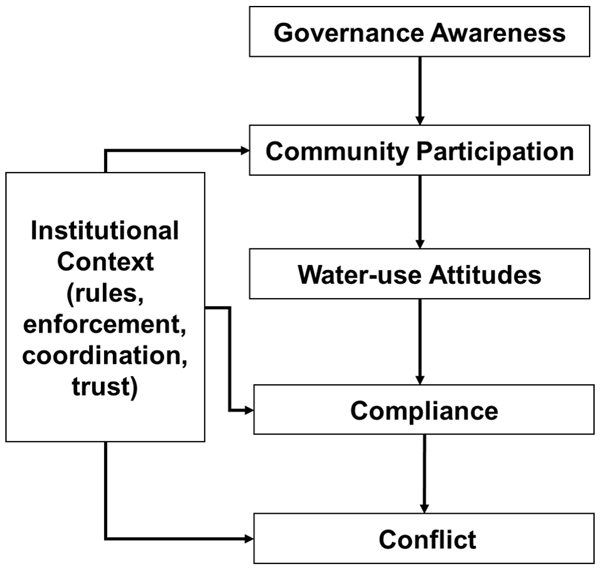
To guide the analysis, this study adopts a conceptual framework linking governance awareness, community participation, water-use attitudes, compliance, and conflict. Governance awareness is expected to influence participation in water management structures, as informed individuals are more likely to engage in collective decision-making processes. Increased participation fosters more favourable attitudes toward water governance and strengthens compliance with established rules. In contrast, low awareness and limited participation may contribute to weak compliance and increased conflicts among water users. The framework also recognizes the role of institutional context, including enforcement mechanisms, coordination among actors, and levels of trust, in shaping these relationships. This approach is grounded in Integrated Water Resources Management (IWRM) and participatory governance principles.
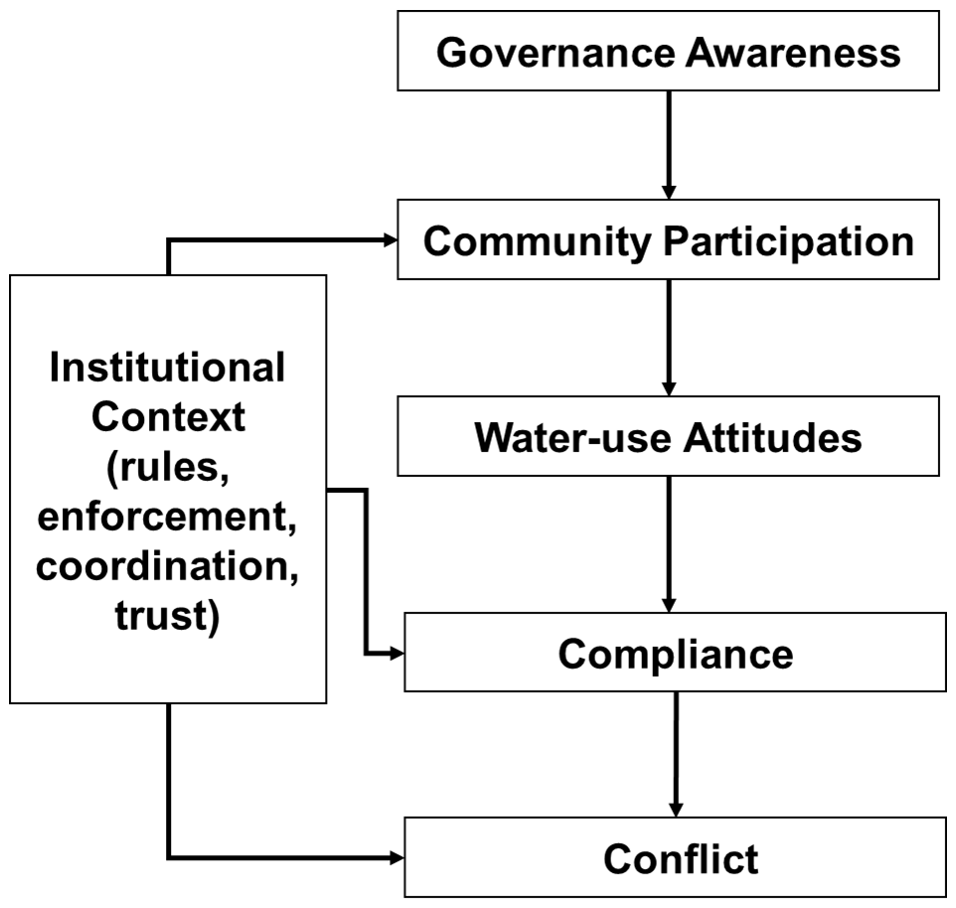
Figure 1Conceptual framework linking governance awareness, participation, attitudes, compliance, and conflict, with institutional context influencing key stages.
This study contributes to the water governance literature in three key ways. First, it provides an integrated empirical assessment linking governance awareness, participation, attitudes, compliance, and conflict within a single analytical framework, whereas many existing studies examine these elements separately. Second, it demonstrates how these relationships operate in the specific context of the Gambia River, a small transboundary river system characterized by limited institutional capacity and strong reliance on community-based governance structures. Third, the study highlights the role of hybrid governance arrangements, particularly local organizations such as COPROVAG, in mediating conflicts and facilitating coordination, offering insights for water management in data-scarce and institutionally constrained river basins.
2.1 Study Area
The Gambia River is a major transboundary river in West Africa, rising in the Fouta Djalon Highlands of Guinea (≈ 1125 m) and flowing through Guinea and Senegal into The Gambia before entering the Atlantic Ocean at Banjul. This study focuses on the middle reaches in Senegal's Tambacounda region (Fig. 2), where rural livelihoods depend strongly on the river through irrigation, livestock watering, fishing, and domestic use.
The region has a Sudano-Guinean climate with a pronounced dry season (November–May) and a short rainy season (June–October), receiving 700–1700 mm of annual rainfall. Vegetation grades from riparian forest and woodland in the south to open savanna in the north. Agricultural expansion, market gardening (notably banana cultivation), settlement growth, and climate variability have increased pressure on river water, making this area well suited for analysing community-level water governance.
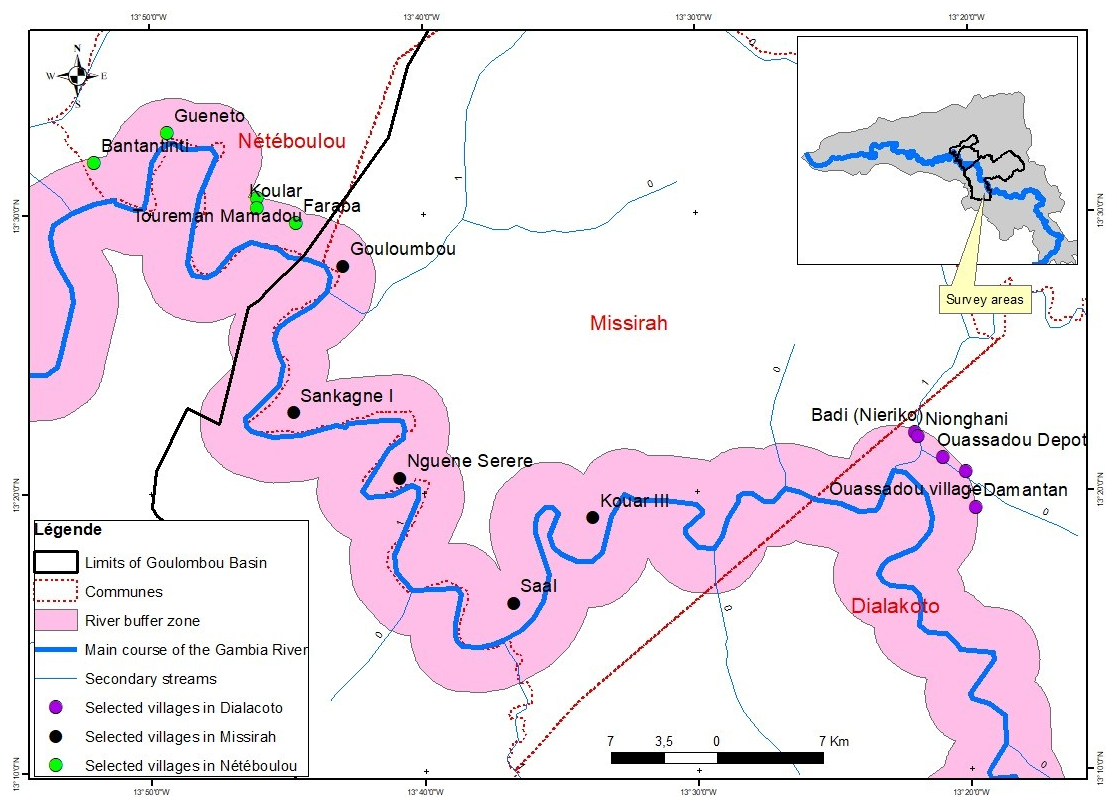
Figure 2Map of the survey villages and their position relative to the River Gambia.
2.2 Data Collection and Survey Design
A household survey was conducted in 15 villages within the rural municipalities of Nettéboulou, Missirah, and Dialacoto, all hydrologically connected to the Gambia River. Villages were selected based on their strong dependence on river water and their contrasting settlement histories, including communities resettled from Niokolo-Koba National Park (Larrue, 2002) and others that migrated southward during the 1970s droughts. Many villages are now part of an irrigated banana and market-gardening zone along the riverbanks.
The required sample size was calculated from 1347 households using Cochran's finite-population formula (Cochran, 1963), Eq. (1), with a 95 % confidence level (Z=1.96), p=0.5, and d=0.05, yielding a target of approximately 300 households. Household numbers were obtained from the Senegalese National Agency for Statistics and Demography (ANSD). The sample was proportionally allocated across villages based on household size, and within each village, households were selected using simple random sampling, ensuring that each household had an equal probability of inclusion.
After piloting in two villages, a structured questionnaire was administered using Kobo Collect by six trained multilingual enumerators (Mandinka, Fulani, Wolof, Diola, and Soninke). A total of 290 valid responses were obtained (> 96 % response rate; Babbie, 2010).
The survey covered awareness of water regulations, perceptions of institutions, participation in decision-making, and experiences of water-related conflicts. Three key informant interviews and focus group discussions were conducted to contextualise survey results and document local governance and conflict-resolution practices.
The formula applied is as follows:
3.1 Awareness and Participation in Water Governance
Most respondents reported low awareness of water regulations and government agencies responsible for water management (Fig. 3a, b).
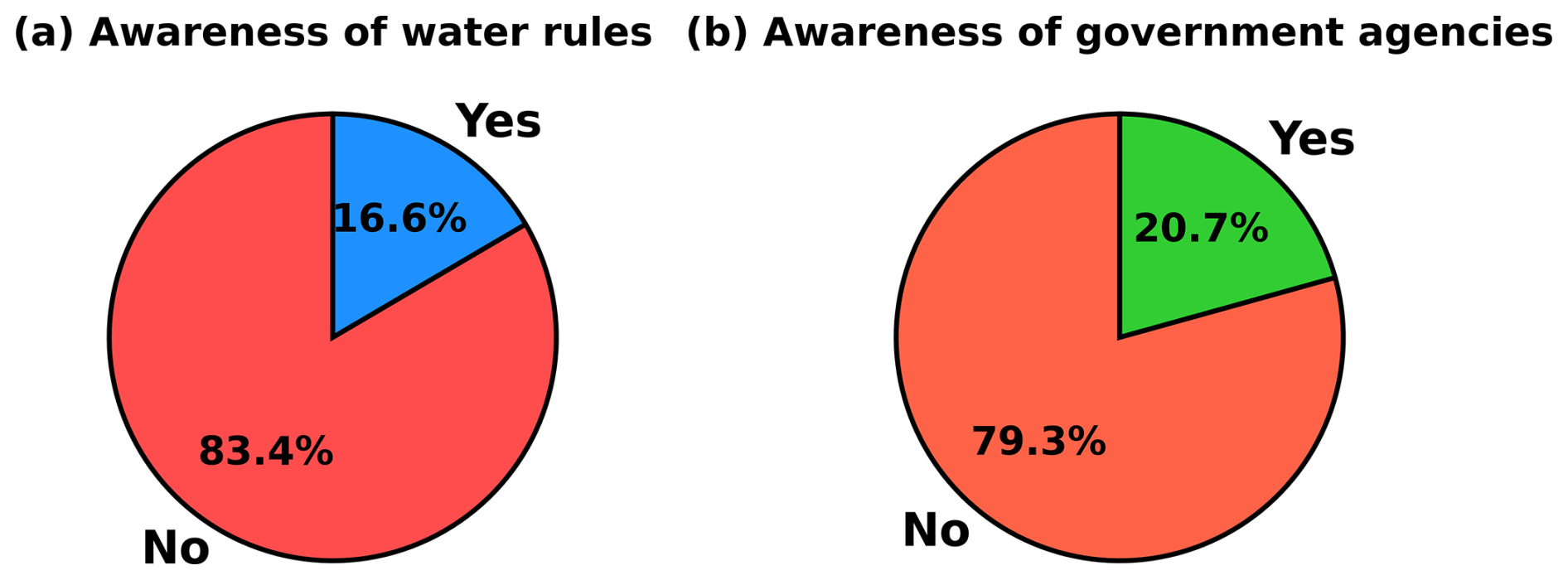
Figure 3Respondents' perception on (a) awareness of rules/regulations, (b) awareness of government agencies related to water in the study area.
Participation in community water associations was also low (Fig. 4).
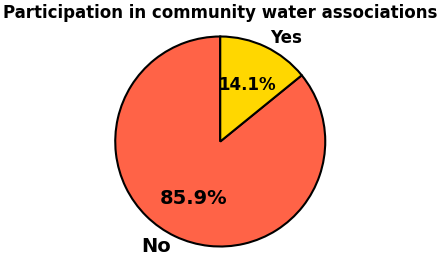
In line with the conceptual framework, chi-square analysis revealed a significant association between awareness of water rules and participation in community water associations (χ2=35.91, p<0.001; Table 1).
Among respondents aware of water regulations, 41.7 % reported participation in associations, compared to only 8.7 % among those without such awareness. These results indicate that governance awareness is a key driver of participation, supporting the proposed pathway in which knowledge of institutional rules and structures enhances engagement in collective water management.
Table 1Tabulation of individuals' knowledge of water rules/regulations and their participation in community water associations.
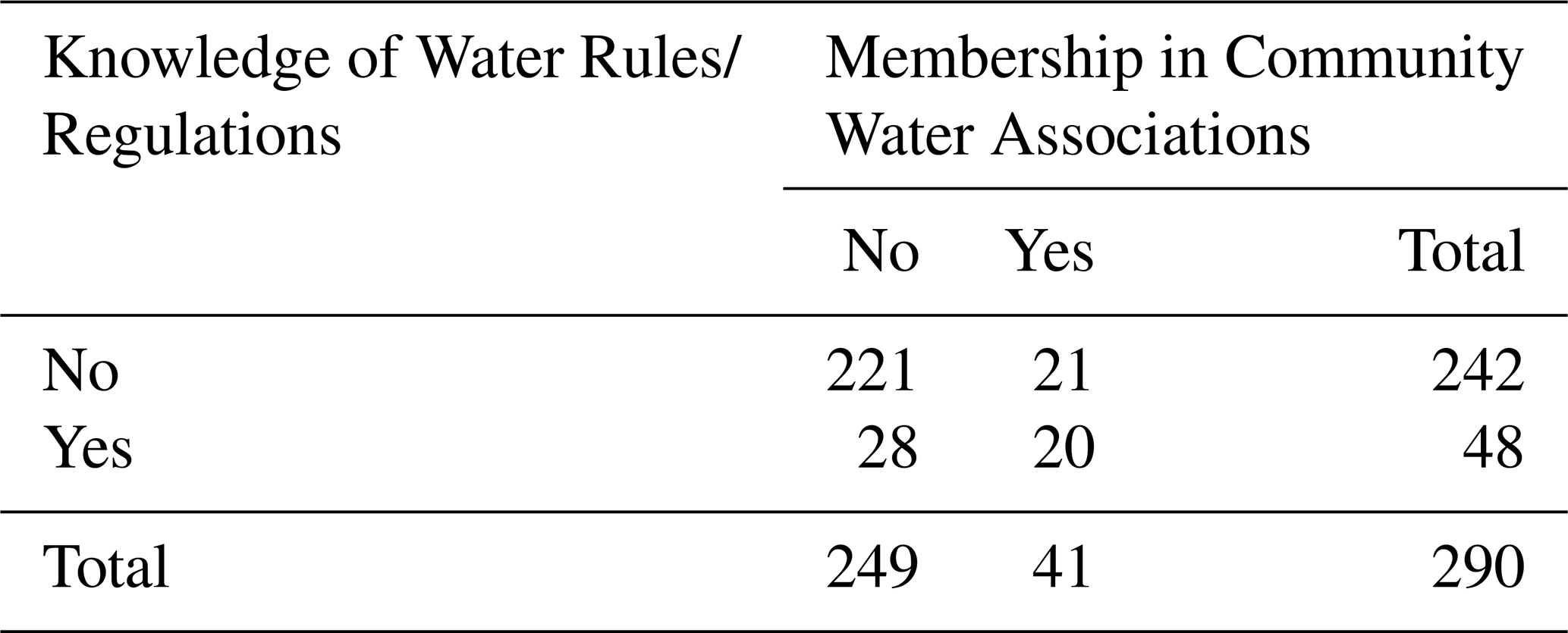
Pearson χ2=35.91. Prob = 0.0000.
3.2 Attitudes and Rule Perception
Favourable attitudes toward responsible water use were reported by 51.4 % of respondents, while the remainder cited inequities, weak enforcement, and corruption as reasons for unfavourable perceptions. Consistent with the conceptual framework, awareness of water rules was significantly associated with attitudes toward water use (χ2=23.51, p<0.001; Table 2), suggesting that informed individuals are more likely to adopt positive perceptions of governance systems.
Table 2Tabulation of knowledge of respondents' awareness of water rules/regulations and their attitude toward appropriate water use.
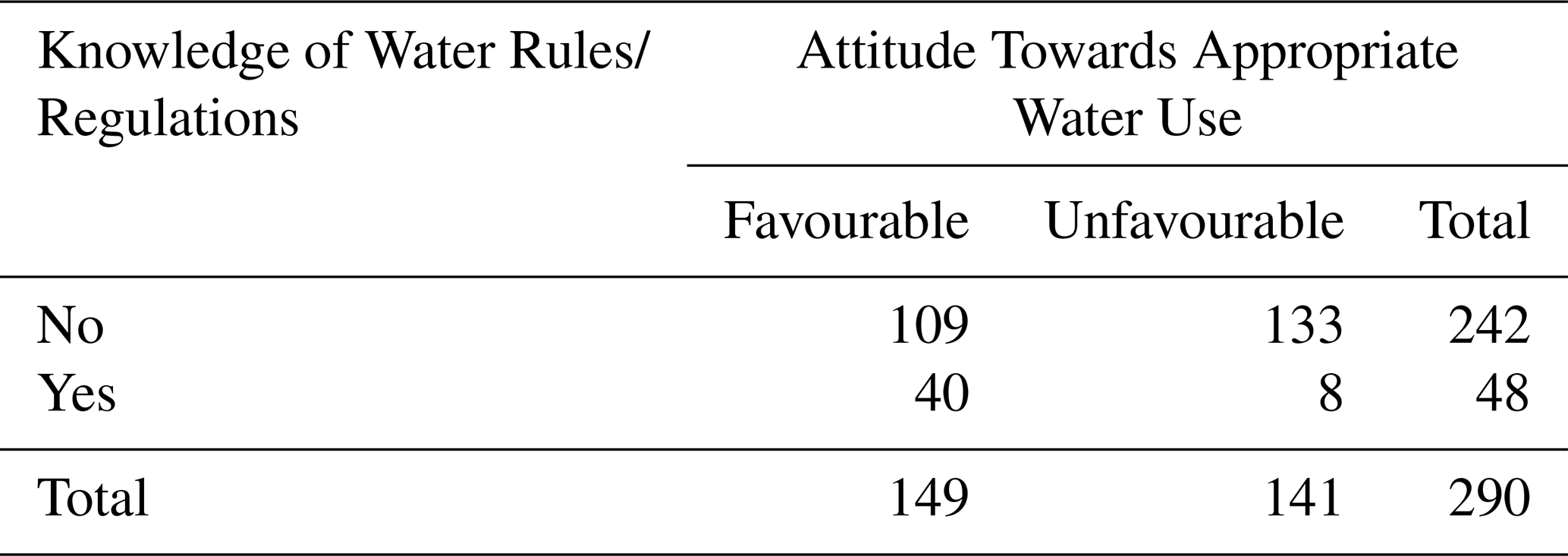
Pearson χ2=23.51. Prob = 0.0000.
Perceptions of compliance reflected these attitudes: 50 % of respondents believed that water rules were respected, 43.5 % disagreed, and 6.5 % reported very high compliance. A significant association was observed between attitudes and perceived compliance (χ2=41.69, p<0.001; Table 3), indicating that favourable attitudes are linked to higher levels of compliance.
Table 3Tabulation of respondents' attitudes toward appropriate water use and their perception of respect for existing water rules.
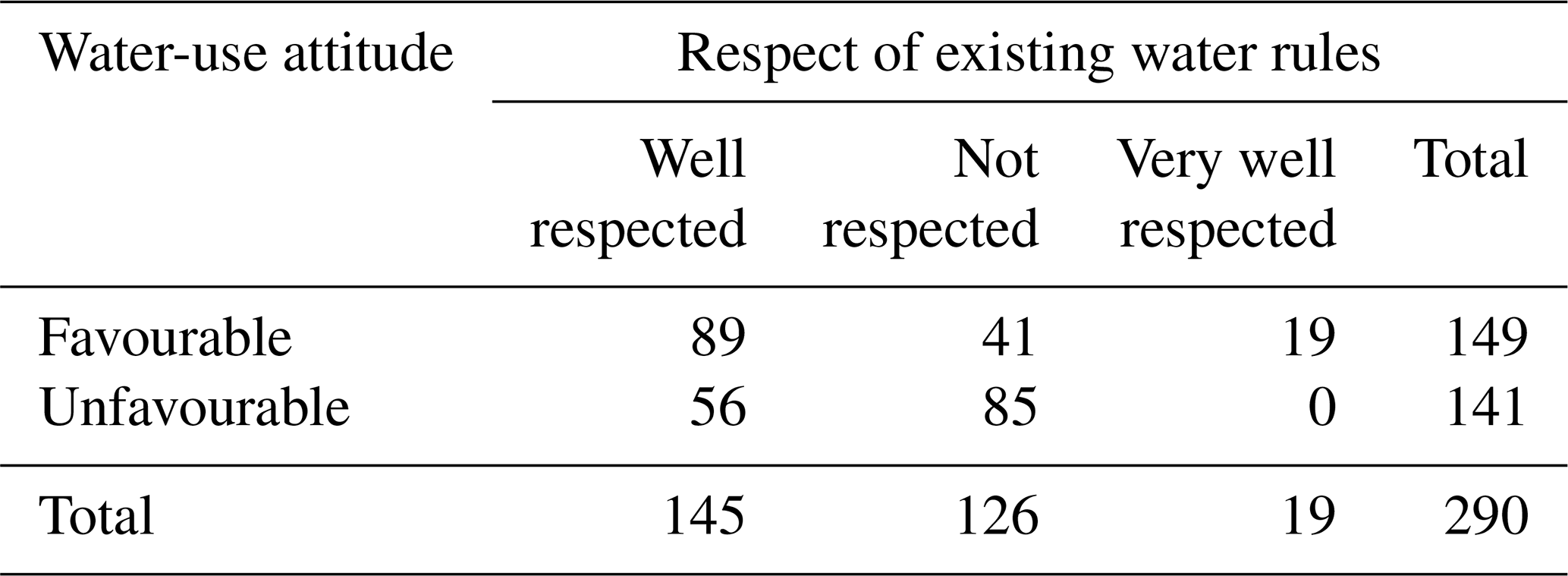
Pearson χ2=41.69. Prob = 0.0000.
Key barriers to compliance included lack of public awareness, weak institutional coordination, limited government commitment, poor enforcement, and corruption (Fig. 5). Conversely, respondents identified improved water access, conflict reduction, enhanced organization, and collective stewardship as key benefits of compliance. These findings highlight the combined influence of awareness, perceptions, and institutional factors on compliance behaviour.
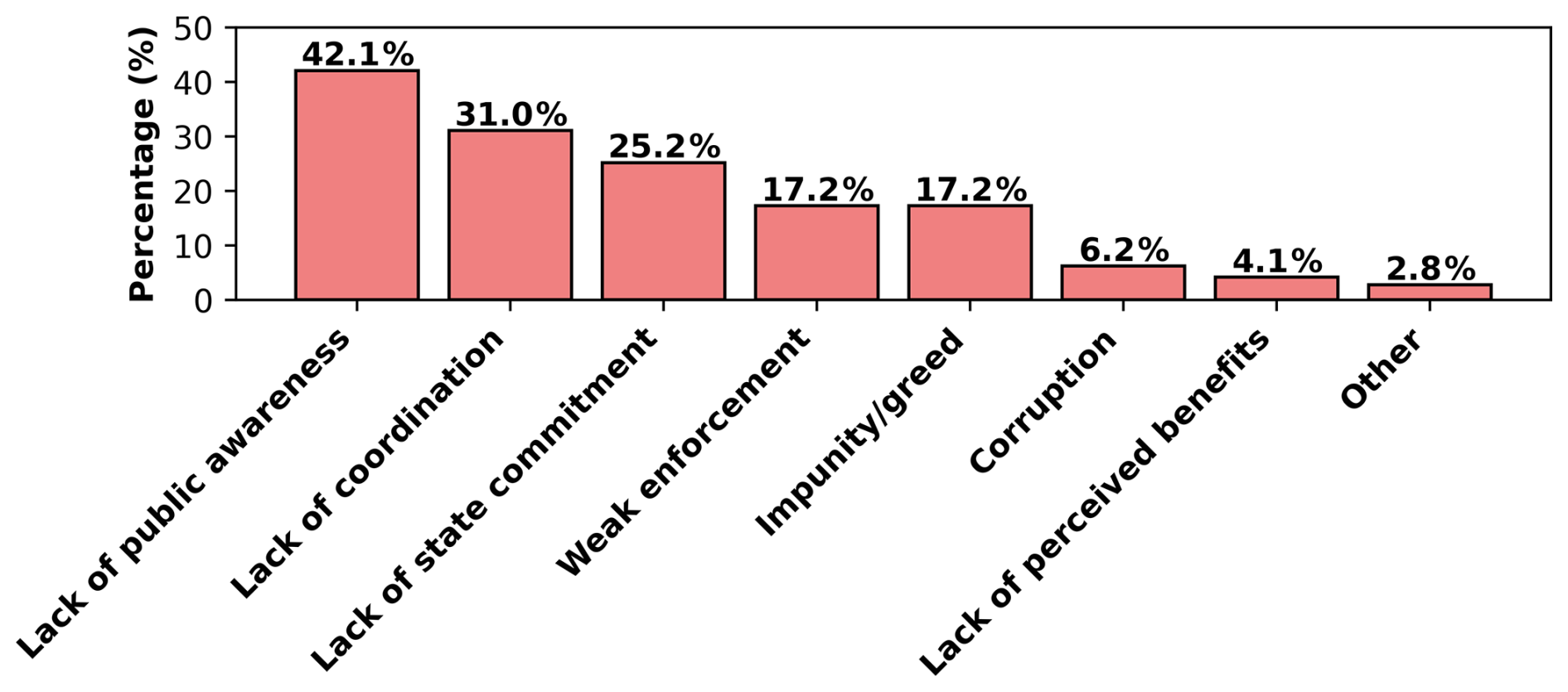
Figure 5Respondents' perception of factors affecting the compliance with water rules/regulations.
3.3 Conflict and Coordination
Approximately 25 % of respondents reported water-related conflicts, predominantly between farmers and livestock herders (75.6 %), with smaller proportions involving farmers (9.8 %) and fishermen or domestic users (14.6 %) (Fig. 6a). Reported drivers of conflict included livestock encroachment on farmlands, dry-season rule violations, inadequate irrigation infrastructure, land disputes, and weak institutional oversight.
Consistent with the final stage of the conceptual framework, these conflicts reflect the combined effects of weak compliance and limited institutional coordination.
Perceived coordination was generally low, occurring through institutional actors (50.7 %) or local consultations (49.4 %) (Fig. 6b).
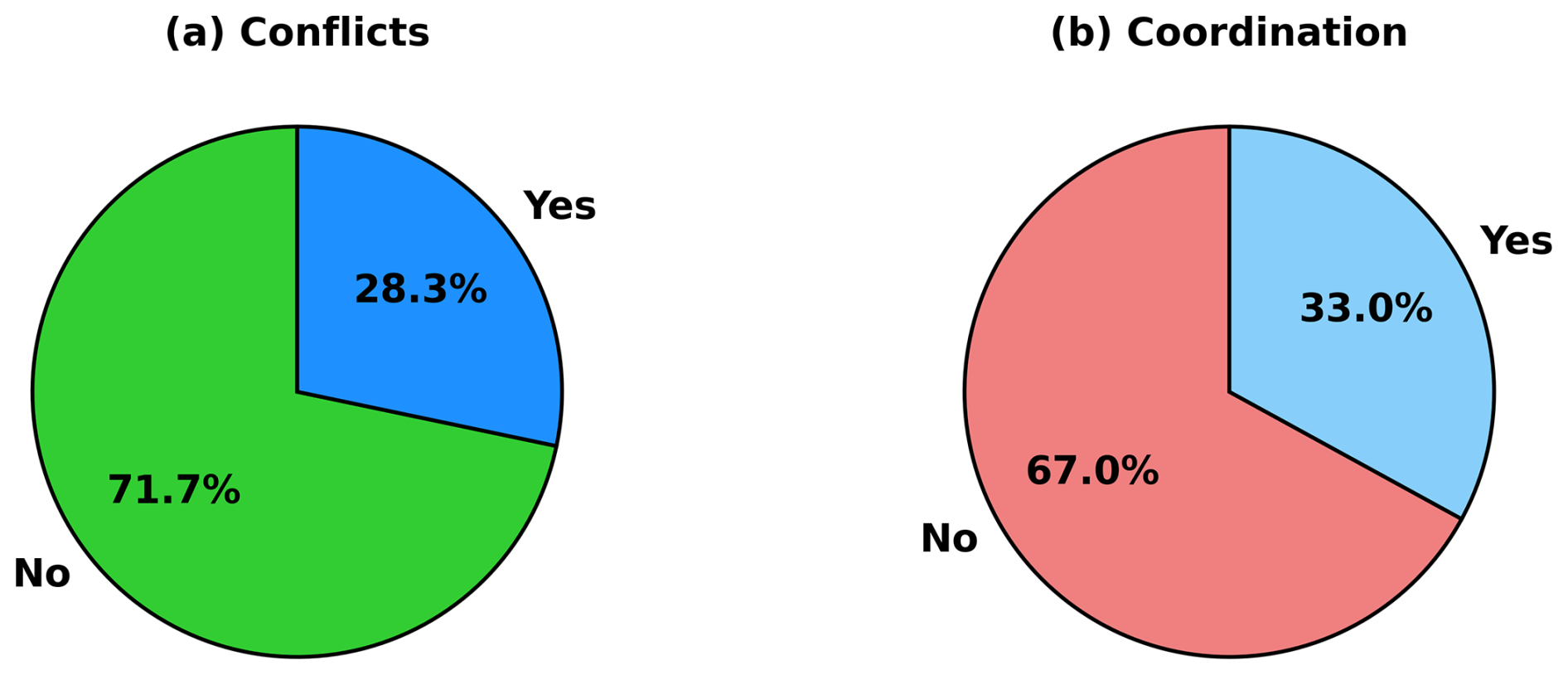
Figure 6Respondents' perception of the occurrence of conflicts (a) and coordination in water resource management related in the study area.
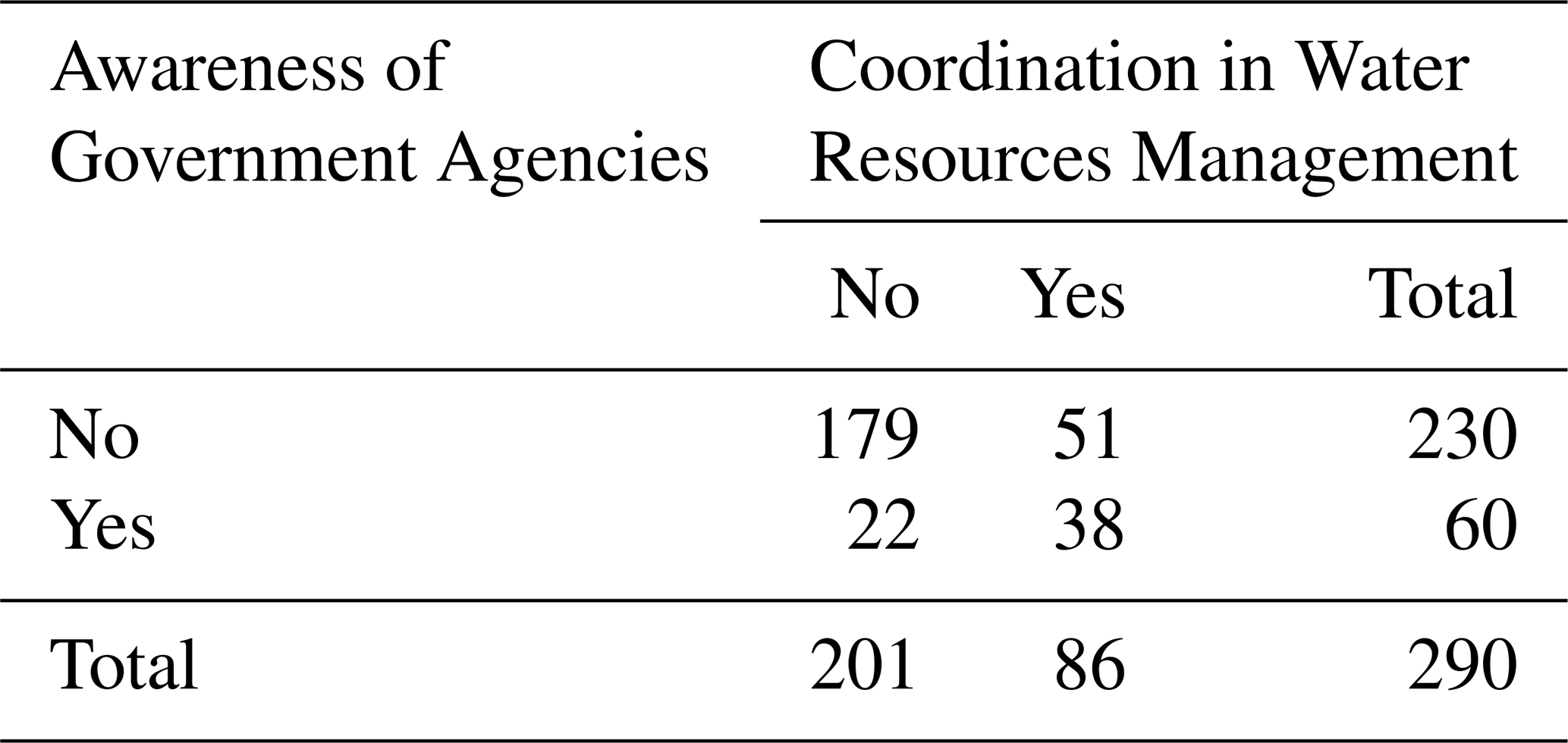
Awareness of government agencies was significantly associated with perceived coordination (χ2=38.07, p<0.001; Table 4), indicating that institutional visibility enhances coordination effectiveness. Respondents also highlighted the role of COPROVAG in facilitating consultation, regulating resource use, coordinating local groups, and monitoring compliance. Overall, these findings suggest that gaps in institutional coordination and enforcement contribute to conflict emergence, reinforcing the role of institutional context in shaping water governance outcomes.
Table 4Tabulation of respondents' awareness of government agencies involved in water management and their perception of coordination efforts in water resources management.
This study demonstrates that water governance outcomes along the Gambia River are shaped by a pathway linking governance awareness, participation, attitudes, compliance, and conflict, consistent with the conceptual framework guiding the analysis. The findings show generally low awareness of water regulations and limited participation in local water governance structures, with a strong association between awareness and participation (χ2=35.91, p<0.001). This confirms that governance awareness is a key entry point for effective participation, as individuals who are informed about rules and institutions are more likely to engage in collective management processes.
Structural and institutional barriers, including weak communication, limited outreach, and low visibility of government agencies, constrain participation. Similar patterns have been reported in other West African river basins, particularly in the Senegal River Valley, where water governance is characterized by strong centralization and limited involvement of local communities in decision-making processes (Séné, 2009). In both the Senegal and Gambia River systems, weak interaction between institutions and local users reduces opportunities for collective participation and weakens governance effectiveness. However, while studies from the Senegal River Valley primarily emphasize institutional dominance and centralized governance structures as the main constraint, the present study demonstrates that low governance awareness at the community level is an additional and important barrier to participation. This suggests that, beyond structural governance limitations, knowledge gaps among local users play a critical role in shaping engagement in water management in the Gambia River system. These findings therefore extend existing evidence from West African river basins by showing that governance effectiveness depends not only on institutional arrangements but also on the extent to which local communities understand and engage with governance processes. Similar governance challenges have also been reported in the Niger Basin, where transboundary cooperation frameworks often struggle to translate institutional arrangements into effective local participation and day-to-day governance practices (Dos Santos, 2023). Improving access to information and supporting local water user associations are therefore critical for enhancing participation and governance effectiveness.
The results further show that awareness influences attitudes toward water use, which in turn shape compliance behaviour. Respondents with greater awareness were more likely to report favourable attitudes, while perceptions of inequity, weak enforcement, and corruption contributed to negative attitudes. This supports the conceptual pathway linking awareness to attitudes and compliance. Similar findings have been reported in other contexts, where civic education and exposure to governance processes enhance pro-environmental behaviour and adherence to resource management rules (Huttunen et al., 2021, 2022; Kola-Olusanya et al., 2024; Bose et al., 2024). Conversely, perceived governance failures can erode trust and discourage compliance (Shunglu et al., 2022; Wilson et al., 2023).
Compliance was strongly associated with attitudes (χ2=41.69, p<0.001), reinforcing the role of perceptions and trust in shaping behavioural outcomes. However, compliance is not determined by individual attitudes alone but is also influenced by institutional conditions. Weak enforcement, poor coordination, and limited government commitment were identified as key barriers, highlighting the role of institutional context as a cross-cutting factor influencing governance outcomes. Water-related conflicts, particularly between farmers and livestock herders, represent the final outcome of this governance pathway. These conflicts arise from the combined effects of weak compliance, resource competition, and inadequate institutional coordination. Similar dynamics have been documented across Sub-Saharan Africa and other West African river basins, where overlapping resource use, weak governance structures, land-use pressures, and institutional gaps exacerbate tensions between livelihood groups (Touch et al., 2024; Shoko, 2025; Amoah et al., 2025). The predominance of farmer–herder conflicts observed in this study is therefore consistent with broader regional patterns. However, unlike many contexts where conflicts escalate because of limited mediation mechanisms and weak local governance, the Gambia River system demonstrates the important role of community-based organizations such as COPROVAG in facilitating dialogue, coordinating resource use, and mitigating tensions among users. This highlights the significance of hybrid governance arrangements in contexts with limited formal institutional presence and illustrates how locally embedded organizations can partially compensate for governance gaps. The findings therefore reinforce the argument that conflict is not only a function of resource scarcity, but also of governance effectiveness and institutional adaptability.
Evidence from IWRM and collaborative governance literature suggests that such arrangements enhance trust, accountability, and adaptive capacity (Fish et al., 2010; Neto and Camkin, 2022; Chuenchum et al., 2024).
Unlike larger and more institutionally structured river basins in West Africa, the Gambia River system is characterized by localized governance, limited administrative presence, and a strong reliance on community-based organizations for coordination and conflict resolution. This creates a governance environment in which informal and hybrid institutional arrangements play a more central role than formal regulatory systems. The findings of this study therefore highlight how governance outcomes in such contexts are shaped not only by institutional design but also by the capacity of local actors to compensate for formal governance gaps.
Overall, the results demonstrate that effective water governance depends on strengthening the entire pathway from awareness to compliance, while addressing institutional constraints that influence participation, coordination, and conflict resolution. This reinforces the importance of integrating participatory governance principles within IWRM frameworks, particularly in data-scarce and institutionally constrained river basins.
This study has several limitations. First, the reliance on self-reported data introduces the possibility of social desirability bias, where respondents may overstate compliance or positive attitudes. Second, the cross-sectional design limits the ability to establish causal relationships between governance awareness, participation, and outcomes. Third, the focus on the middle reaches of the Gambia River in Senegal may limit the generalizability of findings to other parts of the basin or different institutional contexts.
Despite these limitations, the study provides important insights for policy and practice. In the short term, targeted awareness campaigns and capacity-building programs can improve knowledge of water regulations and enhance participation in governance structures. Strengthening local cooperatives and water user associations can facilitate coordination and conflict resolution at the community level. In the longer term, institutional reforms are needed to improve enforcement, enhance coordination among actors, and integrate traditional authorities into governance frameworks to build trust and legitimacy.
Future research should adopt longitudinal approaches to better capture changes in governance dynamics over time and incorporate multivariable models to assess the relative influence of socio-economic and institutional factors. Integrating administrative and hydrological data could further strengthen the analysis and improve the robustness of findings.
This study shows that water governance outcomes along the Gambia River are shaped by a pathway linking awareness, participation, attitudes, and compliance, with institutional context influencing key stages of this process. Low awareness and limited participation constrain effective governance, while weak institutional coordination and enforcement contribute to non-compliance and conflict.
At the same time, community-based organizations play a critical role in enhancing coordination, building trust, and supporting equitable resource management. Strengthening both institutional structures and community engagement is therefore essential for sustainable water governance. These findings highlight the need for integrated, participatory approaches that combine formal governance mechanisms with locally embedded practices to enhance resilience and long-term sustainability in river basin management.
All data used in this study are available from the corresponding author upon reasonable request. The data are not publicly available because they contain information collected through household surveys, key informant interviews, and focus group discussions.
The supplement related to this article is available online at https://doi.org/10.5194/piahs-389-25-2026-supplement.
MK, BS and CF conceptualized the study. MK and BS conducted the field surveys and data collection. MK and CF performed the data analysis and interpretation. GL and NY supervised the study and provided scientific guidance. MK prepared the original draft of the manuscript. CF, MLM, NY, and GL reviewed and edited the manuscript. All authors read and approved the final manuscript.
The contact author has declared that none of the authors has any competing interests.
Publisher's note: Copernicus Publications remains neutral with regard to jurisdictional claims made in the text, published maps, institutional affiliations, or any other geographical representation in this paper. The authors bear the ultimate responsibility for providing appropriate place names. Views expressed in the text are those of the authors and do not necessarily reflect the views of the publisher.
This article is part of the special issue “Circular Economy and Technological Innovations for Resilient Water and Sanitation Systems in Africa II”. It is a result of the 2nd Edition of the C2EA Water and Sanitation Week on “From Research to Innovation and Technology Transfer”, Cotonou, Benin, 3–5 June 2025.
This study was conducted as part of the doctoral research programme of the West African Science Service Centre on Climate Change and Adapted Land Use (WASCAL). The authors sincerely thank the participating households, community leaders, and field enumerators for their valuable cooperation and support during the field data collection.
This research forms part of a PhD programme funded by the German Federal Ministry of Education and Research (BMBF) under the framework of the West African Science Service Centre on Climate Change and Adapted Land Use (WASCAL).
This paper was edited by Audace Amen V. Dossou-Olory and reviewed by Audace Amen V. Dossou-Olory and one anonymous referee.
Amoah, E. A., Bloomer, J., and Campbell, T.: Beyond resource scarcity: developing an integrated framework for analysing farmer–herder conflicts in the Global South, Pastoralism, 15, 15245, https://doi.org/10.3389/past.2025.15245, 2025.
Araral, E. and Wang, Y.: Water governance 2.0: a review and second-generation research agenda, Water Resour. Manag., 27, 3945–3957, https://doi.org/10.1007/S11269-013-0389-X, 2013.
Babbie, E.: The practice of social research, 12th Edn., Wadsworth, Belmont, ISBN-13 978-0495598411, 2010.
Bose, D., Bhattacharya, R., Kaur, T., Banerjee, R., Bhatia, T., Ray, A., Batra, B., Mondal, A., Ghosh, P., and Mondal, S.: Overcoming water, sanitation, and hygiene challenges in critical regions of the global community, Water-Energy Nexus, 7, 277–296, https://doi.org/10.1016/j.wen.2024.11.003, 2024.
Chuenchum, P., Meneesrikum, C., Teerapanuchaikul, C., and Sriariyawat, A.: Community participation and effective water management: a study on water user organizations (WUOs) in Thailand, World Dev. Perspect., 34, 100589, https://doi.org/10.1016/j.wdp.2024.100589, 2024.
Cochran, W. G.: Sampling techniques, 2nd Edn., John Wiley & Sons, New York, ISBN-13 978-0471162391, 1963.
Dos Santos, M. R. W.: Water cooperation within West Africa's major transboundary river basins, Regions and Cohesion, 13, 25–52, https://doi.org/10.3167/RECO.2023.130203, 2023.
Fish, R. D., Ioris, A. A. R., and Watson, N. M.: Integrating water and agricultural management: collaborative governance for a complex policy problem, Sci. Total Environ., 408, 5623–5630, https://doi.org/10.1016/j.scitotenv.2009.10.010, 2010.
Huttunen, S., Kaljonen, M., Lonkila, A., Rantala, S., Rekola, A., and Paloniemi, R.: Pluralising agency to understand behaviour change in sustainability transitions, Energy Res. Soc. Sci., 76, 102067, https://doi.org/10.1016/j.erss.2021.102067, 2021.
Huttunen, S., Ojanen, M., Ott, A., and Saarikoski, H.: What about citizens? A literature review of citizen engagement in sustainability transitions research, Energy Res. Soc. Sci., 91, 102714, https://doi.org/10.1016/j.erss.2022.102714, 2022.
Kola-Olusanya, A., Oyeyemi, E., Adewale, P. S., and Omobuwa, O.: Role of environmental education in water pollution prevention and conservation in Nigeria, Water Supply, 24, 361–370, https://doi.org/10.2166/ws.2023.337, 2024.
Koop, S. H. A., Koetsier, L., Doornhof, A., Reinstra, O., Van Leeuwen, C. J., Brouwer, S., Dieperink, C., and Driessen, P. P. J.: Assessing the governance capacity of cities to address challenges of water, waste, and climate change, Water Resour. Manag., 31, 3427–3443, https://doi.org/10.1007/S11269-017-1677-7, 2017.
Larrue, S.: Le Parc National du Niokolo-Koba: un exemple de rupture entre le milieu et la société mandingue (Sénégal Oriental)?, Cah. d'Outre-Mer, 55, 149–174, https://doi.org/10.4000/com.1076, 2002.
Neto, S. and Camkin, J.: Transparency, regional diversity, and capacity building: cornerstones for trust and engagement in good water governance, Water Int., 47, 238–256, https://doi.org/10.1080/02508060.2022.2037850, 2022.
Pahl-Wostl, C.: An evolutionary perspective on water governance: from understanding to transformation, Water Resour. Manag., 31, 2917–2932, https://doi.org/10.1007/S11269-017-1727-1, 2017.
Séné, A. M.: Développement durable et impacts des politiques publiques de gestion de la vallée du fleuve Sénégal: du régional au local, VertigO, 9, https://doi.org/10.4000/vertigo.9221, 2009.
Shoko, E.: Structural determinants of conflicts and cooperation in rural water management, Peace Rev., https://doi.org/10.1080/10402659.2025.2485300, 2025.
Shunglu, R., Köpke, S., Kanoi, L., Nissanka, T. S., Withanachchi, C. R., Gamage, D. U., Dissanayake, H. R., Kibaroglu, A., Ünver, O., and Withanachchi, S. S.: Barriers in participative water governance: a critical analysis of community development approaches, Water, 14, 762, https://doi.org/10.3390/w14050762, 2022.
Touch, V., Tan, D. K. Y., Cook, B. R., Liu, D. L., Cross, R., Tran, T. A., Utomo, A., Yous, S., Grunbuhel, C., and Cowie, A.: Smallholder farmers' challenges and opportunities: implications for agricultural production, environment and food security, J. Environ. Manag., 370, 122536, https://doi.org/10.1016/j.jenvman.2024.122536, 2024.
Wilson, N. J., Montoya, T., Lambrinidou, Y., Harris, L. M., Pauli, B. J., McGregor, D., Patrick, R. J., Gonzalez, S., Pierce, G., and Wutich, A.: From “trust” to “trustworthiness”: Retheorizing dynamics of trust, distrust, and water security in North America, Environ. Plan. E Nat. Space, 6, 42–68, https://doi.org/10.1177/25148486221101459, 2023.