
the Creative Commons Attribution 4.0 License.
the Creative Commons Attribution 4.0 License.
 | 12 Dec 2025
Dynamics of freshwater benthic macroinvertebrates in West African lagoons: Lake Nokoué and Porto-Novo Lagoon complex, Southern Benin
Mouhamed Orou Nari Chabi Kpera
Serge Hubert Togouet Zébazé
Youssouf Abou
The Lake Nokoué and Porto-Novo Lagoon complex represents the most important Lagoon system in Benin and is influenced by saltwater intrusion during Low water period via Cotonou channel. The main objective was to determine the composition and structure of benthic macroinvertebrates based on their preferred habitat. Samples were collected from 15 stations between November 2022 and October 2023, following the fluctuations of the hydrological regime notably High water (October and November), Low water (January and March) and Slight rise water (June and August). The results reveal a total of 79 species across the entire studied Lagoon complex. For Lake Nokoué, the following abundances were obtained for: strictly freshwater taxa (4.27 %), strictly brackish taxa (44.58 %), and strictly saltwater taxa (11.86 %). In the Porto-Novo Lagoon, the following abundances were recorded for: strictly freshwater taxa (7.78 %), strictly brackish taxa (6.96 %), and strictly saltwater taxa (16.83 %). Regarding the hydrological regime, a predominance of strictly freshwater taxa was noted during the High water period in Lake Nokoué. Furthermore, this predominance was recorded during both High and Low water periods within the Porto-Novo Lagoon. Thus, the variation of these taxa was found to be more pronounced in Lake Nokoué (p<0.01) than in the Porto-Novo Lagoon (p>0.05).
- Article
(785 KB) - Full-text XML
- BibTeX
- EndNote


Coastal aquatic ecosystems represent remarkable hydrosystems whose ecological functioning is conditioned by the interaction of two independent factors, namely: marine inputs and freshwater inputs (Obolewski et al., 2018). The increase of salinity in freshwater ecosystems poses a significant threat on an international scale as it reduces aquatic biodiversity, particularly that of freshwater benthic macroinvertebrates (Timpano et al., 2018). According to Wan et al. (2024), benthic macroinvertebrates play a crucial role in coastal ecosystems by acting as essential bioindicators of the ecological quality of these environments.
Furthermore, the Lake Nokoué and Porto-Novo Lagoon complex is largely influenced by its saltwater intrusion of Atlantic Ocean. In light of the observed hydrological fluctuation, several researchers have highlighted the impact of the hydrological regime (saltwater and freshwater intrusion) on the ecological functioning of Lake Nokoué. Most studies conducted have focused on assessing water quality (Zandagba et al., 2016; Odountan et al., 2019; Djihouessi et al., 2021; Sintondji et al., 2022b; Capo-Chichi et al., 2022; Okpeitcha et al., 2022; Chaigneau et al., 2023; Socohou et al., 2024; Ntangyong et al., 2024; Lingofo et al., 2024, 2025). Some research has also been dedicated to ichthyological communities (Lalèyè et al., 2003; Lederoun et al., 2024).
Regarding benthic macroinvertebrates, only the studies conducted by Gnohossou (2006), Odountan et al. (2019), Sintondji et al. (2022a, 2023) on Lake Nokoué and Adandedjan (2012) on Porto-Novo Lagoon are noteworthy. Chaigneau et al. (2023) focused on the zooplankton of Lake Nokoué. However, it should be noted that the study conducted by Gnohossou (2006) was limited to presenting the different taxa based on their preferred habitat without addressing the variation in the composition or structure of benthic macroinvertebrates according to their preferred environments based on the hydrological regime. Therefore, it appears imperative to update existing data while broadening our understanding within the Lake Nokoué and Porto-Novo Lagoon complex.
It is in this context that the present research is situated, with the objective of determining the composition and abundance of benthic macroinvertebrates based on their preferred environments within this Lagoon complex.
2.1 Study Environment
The Lake Nokoué and Porto-Novo Lagoon complex is located in the South of Benin. It is situated between the meridians 2°20′ E and 2°40′ E and the parallels 6°25′ N and 6°30′ N. It covers an area of 180 km2 during the dry season (Yehouenou et al., 2013; Kpanou et al., 2022). It benefits from a subequatorial climate (Lederoun et al., 2024).
This complex is directly connected to the Atlantic Ocean by Lake Nokoué from the Cotonou channel, which is 4.5 km long and 300 m wide (Sintondji et al., 2022a). Lake Nokoué communicates with the Porto-Novo Lagoon through the Totchè canal on its Eastern boundary (Adandedjan et al., 2011). Furthermore, this complex receives inputs of freshwater from local precipitation, runoff, and waterways such as the Ouémé River and the Sô and Djonou rivers (Djihouessi et al., 2019).
2.2 Hydrological regime of the complex
The salinity dynamics within the Lake Nokoué and Porto-Novo Lagoon complex manifest themselves as follows, depending on the hydrological regime (Djihouessi, 2018; Okpeitcha et al., 2022; Chaigneau et al., 2023). First, during the High water period (September–November), caused mainly by heavy rains in Northern Benin, the Lagoon complex fills with freshwater, resulting in a significant rise in water levels. Lake Nokoué undergoes total desalination, reaching zero salinity in October–November. Djihouessi (2018) indicated that water inflows from tributaries exceed 385 m3 s−1 during this period. Okpeitcha et al. (2022) showed that Lake Nokoué becomes completely desalinated when the river flow reaches approximately 50–60 m3 s−1. Then, during Low water period (December–May), Lake Nokoué reaches its minimum water level and is filled with brackish water with an average salinity of around 30 PSU g L−1 in April. Djihouessi (2018) noted that an inflow of less than 50 m3 s−1 from tributaries leads to a significant increase in salinity under the influence of Atlantic Ocean tides. Finally, during the Slight rise in water levels (May–August) resulting from local rainfall, the level of Lake Nokoué rises slightly while its salinity gradually decreases to an average value of less than 10 PSU.
2.3 Sampling Protocol
Samples were collected from 15 stations, 10 located on Lake Nokoué and 5 others on the Porto-Novo Lagoon. Sampling stations were selected based on criteria such as representativeness in terms of ecological functioning, habitat diversity, freshwater and saltwater inflows. For each station, three sampling points approximately 50 m apart were chosen. The different sampling stations within the Lake Nokoué and Porto-Novo Lagoon complex are presented in Fig. 1.
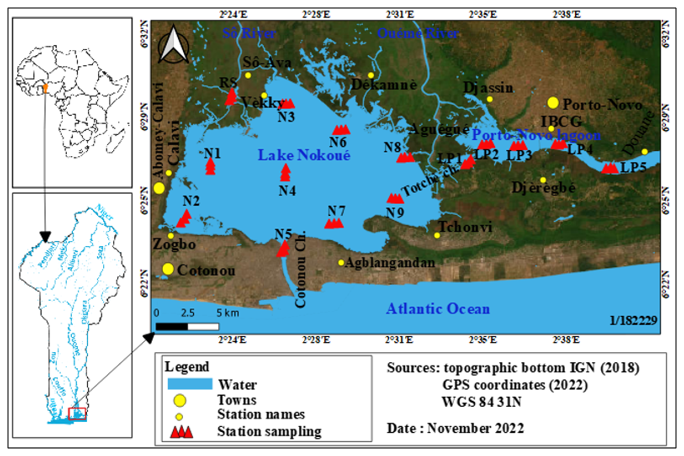
Figure 1Presentation of the sampling stations within the Lake Nokoué and Porto-Novo Lagoon complex.
In total, six sampling campaigns were conducted between November 2022 and October 2023 due to two sampling campaigns for each hydrological period. These periods include the High water period (November 2022 and October 2023), the Low water period (January and March 2023), and the Slight rise water period (June and August 2023). In total, 270 samples of benthic macroinvertebrates were collected, consisting of 180 samples from Lake Nokoué and 90 samples from the Porto-Novo Lagoon.
2.4 Sampling, preservation, and identification
The sediments that host benthic macroinvertebrates were collected using a kick net (mesh size of 0.5 mm) and an Ekman grab (surface area of 225 cm2). These samples were carefully washed so that the residues were transferred into jars, which were labeled according to the sampling station and date. Additionally, the root systems of aquatic macrophytes particularly those of the water hyacinth, were thoroughly cleaned using 200 µm before being added to jars containing sediment. Upon arrival at the Laboratory of Ecology and Management of Aquatic Ecosystems (LEMAE), the samples contained in jars were fixed with a 4 % formaldehyde solution.
For washing, each sample was poured into a 400 µm sieve to be abundantly rinsed with clean water while ensuring that the specimens were not deformed due to the pressure applied. The specimens from each sample were then sorted using entomological tweezers and placed in pillboxes. A 70 % ethanol solution was added to the pillboxes to ensure their preservation before identification.
Finally, the specimens were grouped according to their morphological similarities before any taxonomic identification. The taxa were identified using a binocular microscope from the brand Optica with a magnification of ×20 or ×40. The various identification keys established for different taxonomic groups of benthic macroinvertebrates were used (Nicklès, 1950; Tachet et al., 2010; Fry, 2021). Furthermore, the preferred habitats of benthic macroinvertebrate species have been identified through the World Register of Marine Species (WoRMS).
2.5 Data Analysis
The data analysis focused on the richness and relative abundance of benthic macroinvertebrate taxa based on their preferred environments. Taxon richness is defined as the total number of benthic macroinvertebrate taxa present in the different habitats. Furthermore, relative abundance (%) is calculated as the ratio between the number of individuals belonging to a taxon and the total number of individuals collected during the study period. The chi-square test was applied to the data to verify the influence of the hydrological regime on freshwater benthic macroinvertebrate communities. The results obtained in this research were generated using R software version 4.2.2.
During this study, salinity and electrical conductivity values varied significantly depending on the hydrological regime within the Lake Nokoué and Porto-Novo Lagoon complex (p<0.001). The highest values were obtained during the Low water period, while the lowest values were recorded during the High water period (Table 1).
Table 1Salinity and Electrical Conductivity (EC) variation according to the hydrological regime in Lake Nokoué and Porto-Novo Lagoon Complex.
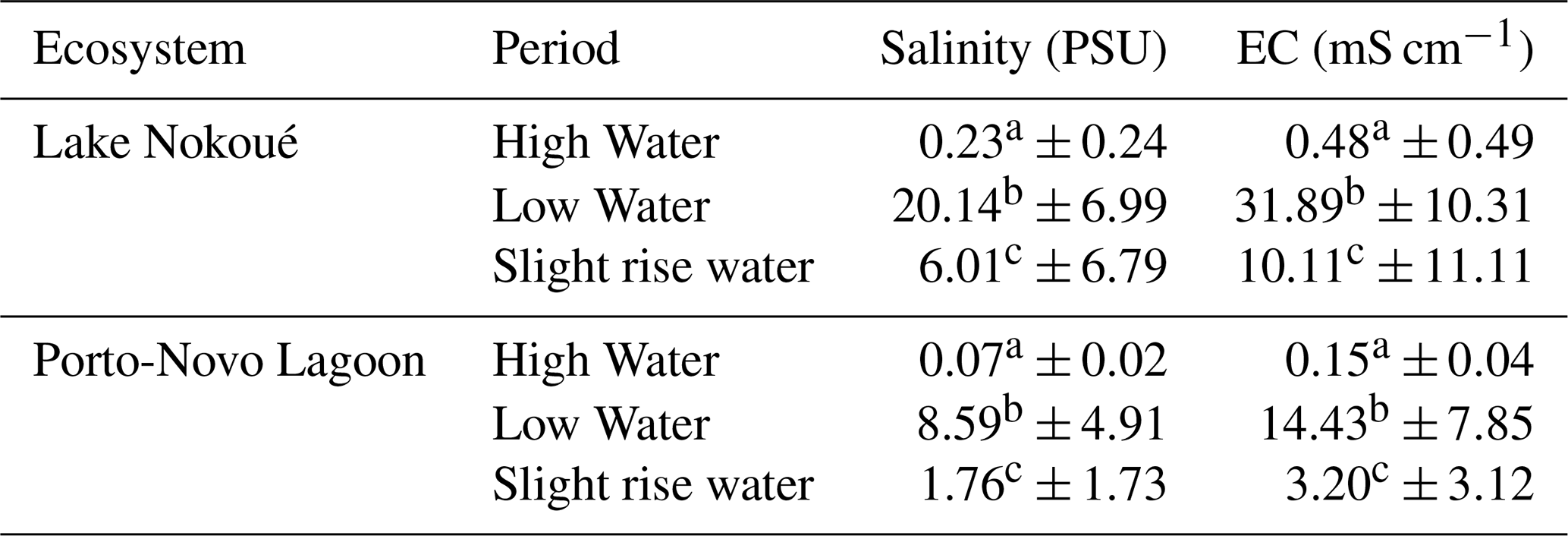
The different letters a, b and c indicate significant differences between means according to the post-hoc Tukey test (p<0.05).
The results obtained on variations in salinity and Electrical conductivity within Lake Nokoué are similar to those recorded by Okpeitcha et al. (2022) and Chaigneau et al. (2023). The highest values obtained during the Low water period can be explained by the saltwater intrusion into Lake Nokoué from the Cotonou channel, which then spreads throughout the entire complex studied. On the other hand, the low values recorded can be explained by the increase in river flow during High water period. Lingofo et al. (2024) obtained the increase from Suspended solids, Turbidity, Nitrite, Nitrate and Phosphate values during Slight rise water and High water within Lake Nokoué. This increase results from the re-suspension of settled particles and nutrients trapped in the sediment, as well as from the runoff of organic and inorganic particle-laden wastewater from the watershed.
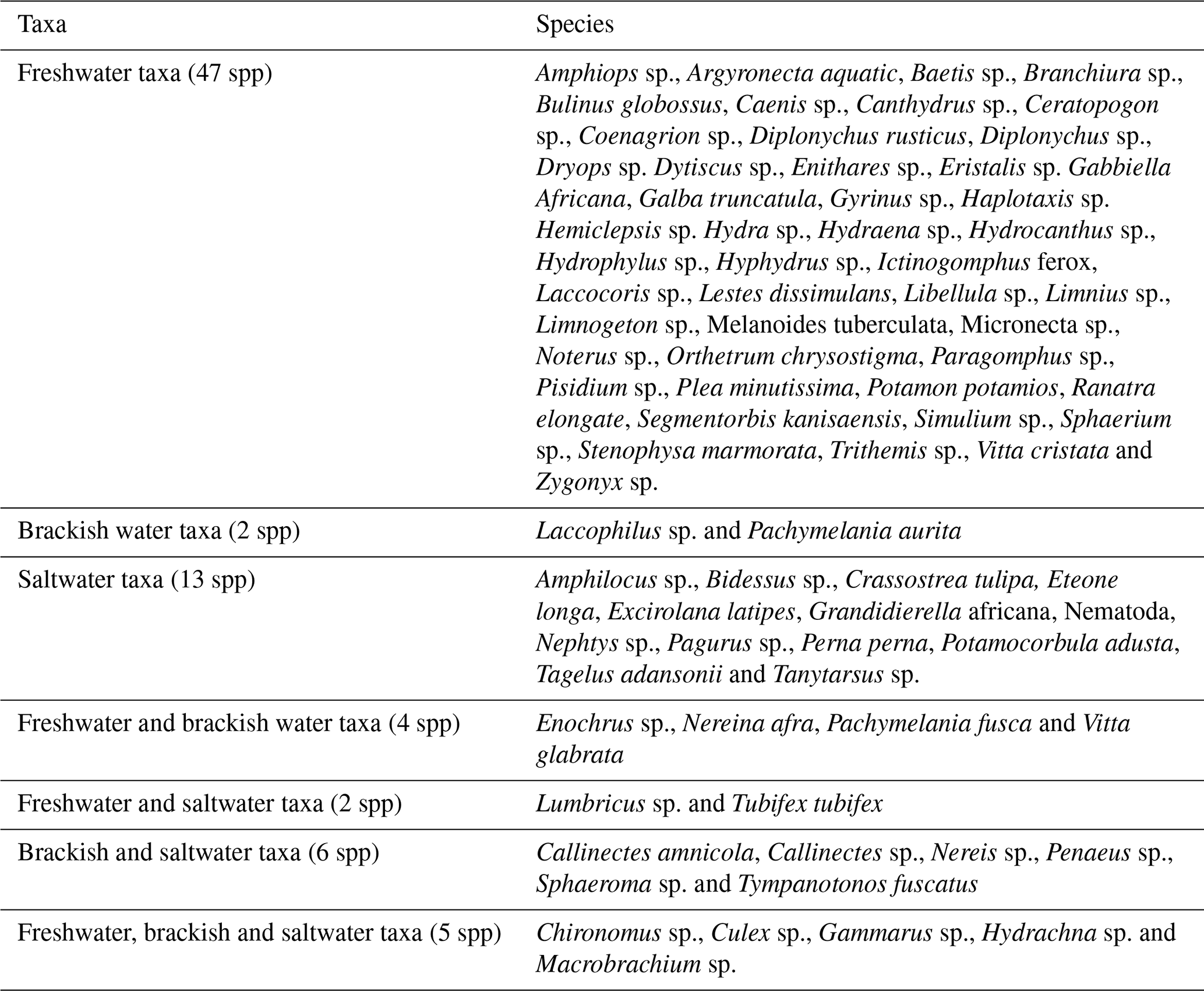
The analysis of Table 2 reveals that freshwater taxa are distinguished by a higher richness totaling 47 species. They are followed by saltwater taxa, which count 13 species, as well as brackish and saltwater taxa with 6 species. In contrast, brackish taxa, as well as those from freshwater and saltwater, are represented in minimal numbers with only 2 species.
Table 2List of benthic macroinvertebrate species of the Lake Nokoué and Porto-Novo Lagoon complex according to their preferred habitat.
Lake Nokoué and Porto-Novo Lagoon are primarily colonized by Arthropods, Mollusks, and Annelids (Gnohossou, 2006; Adandedjan, 2012; Odountan et al., 2019). The remarkable richness of Insects observed in these two ecosystems has been also reported by others authors (Gnohossou, 2006; Adandedjan, 2012; Odountan et al., 2019). This richness has contributed to the high richness of freshwater taxa, given that the majority of Insects are exclusively associated with freshwater environments.
Table 3 indicates that the diversity of benthic macroinvertebrates ranges from 50 species in the Porto-Novo Lagoon to 71 species in Lake Nokoué. Freshwater taxa are distinguished by their richness within these two aquatic ecosystems, with 28 and 40 species respectively.
Table 3Richness of benthic macroinvertebrates in Lake Nokoué and Porto-Novo Lagoon according to their preferred environment.
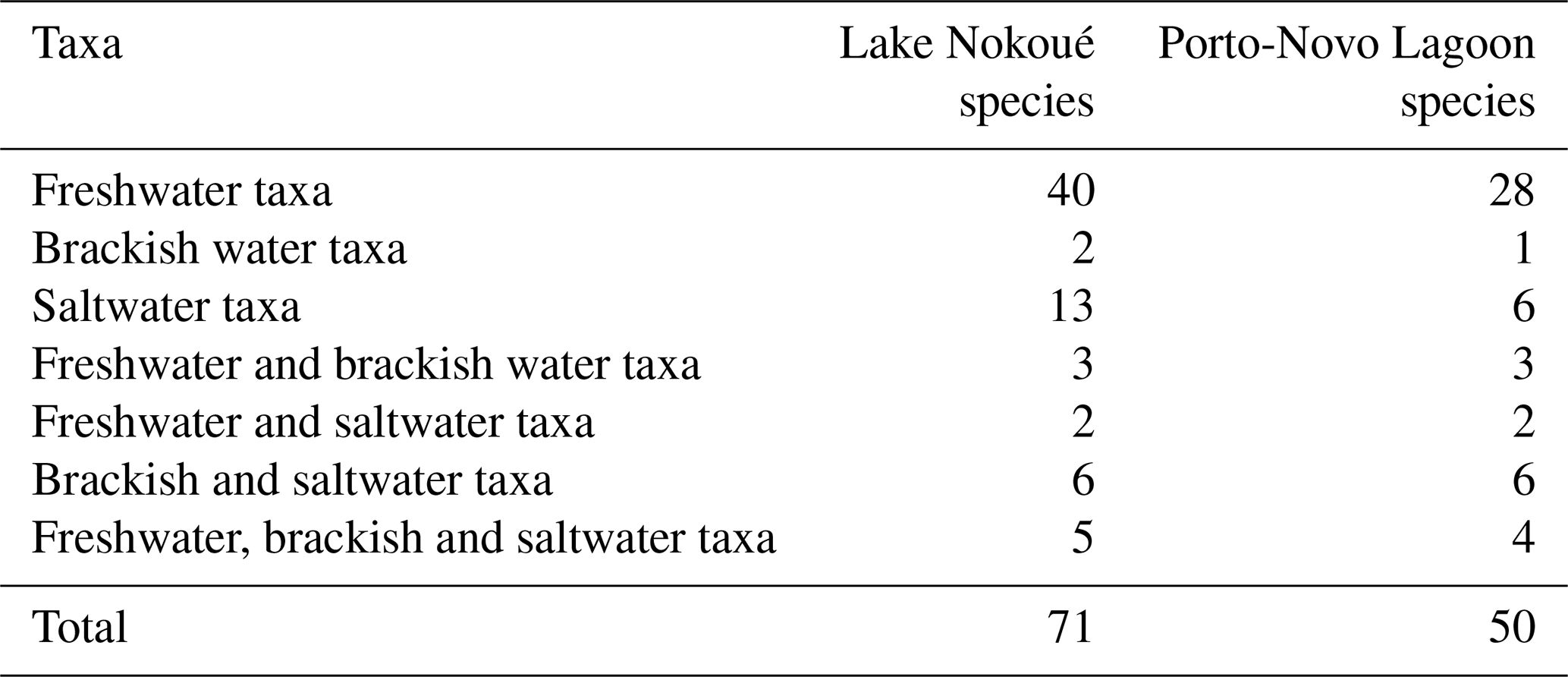
The high specific richness obtained in Lake Nokoué could be attributed to the influence of marine waters during the low water period, which favors the arrival of marine species to Lake Nokoué. Furthermore, the extent of Lake Nokoué and the heterogeneity of its habitats offer relatively favorable ecological conditions for the development of benthic macroinvertebrates.
Gnohossou (2006) categorized the taxa of benthic macroinvertebrates present in Lake Nokoué into four distinct groups based on their tolerance to salinity. These groups include: taxa exclusively adapted to saline waters, saline water taxa with a high tolerance to low salinity, taxa specifically associated with freshwater, as well as freshwater taxa with a high tolerance to salinity.
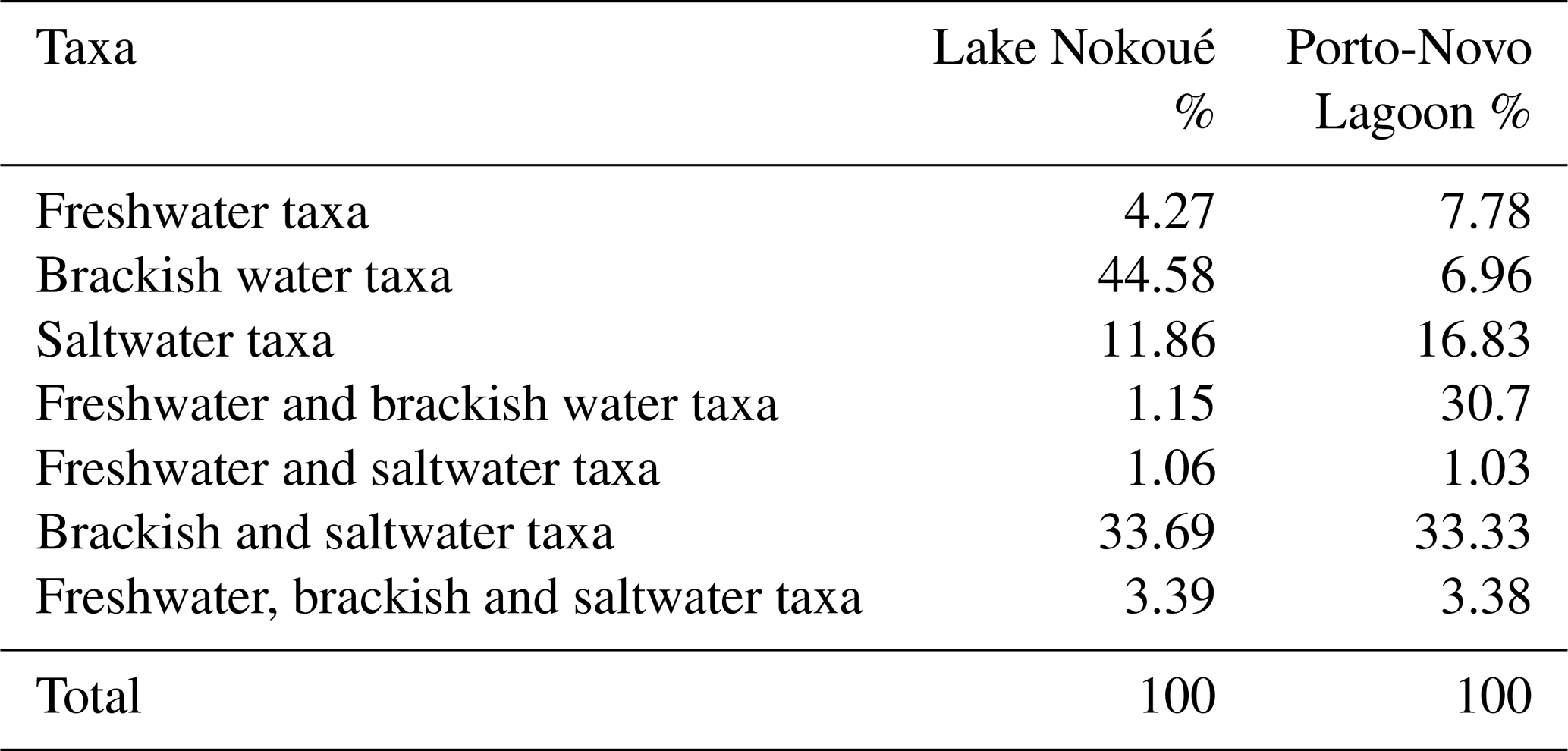
The analysis of Table 3 reveals that in Lake Nokoué, brackish water taxa as well as those of brackish and salty waters dominate respectively with proportions of 44.58 % and 33.69 %. Regarding the Porto-Novo Lagoon, brackish and salty water taxa as well as those of fresh and brackish waters show values of 33.33 % and 30.7 %. In contrast, freshwater taxa are represented with values of 4.67 % for Lake Nokoué and 7.78 % for Porto-Novo Lagoon. A highly significant variation was observed between the two ecosystems concerning the relative abundance of different taxa (p<0.001).
Table 4Relative abundance (%) of benthic macroinvertebrates in Lake Nokoué and Porto-Novo Lagoon according to their preferred environment.
Gnohossou (2006) and Adandedjan (2012) noted that certain species of gastropods have distinguished themselves by their regularity and dominance both in Lake Nokoué and in the Porto-Novo Lagoon. These species exhibit a notable tolerance to salinity and pollution. The results obtained on the abundance of freshwater benthic macroinvertebrate taxa highlight the significant impact of saltwater intrusion on the structure of freshwater macroinvertebrates in the Lake Nokoué.
The increase of salinity influences negatively the richness and abundance of sensitive taxa. At the same time, it promotes the proliferation of salinity tolerant taxa (Timpano et al., 2018). Kefford et al. (2016) reported that salinity sensitive taxa show a significant decrease in their abundance in waterways with increased salinity (Kefford et al., 2016). According to Van Diggelen and Montagna (2016), salinity fluctuation could constitute a disturbance that creates unstable habitats.
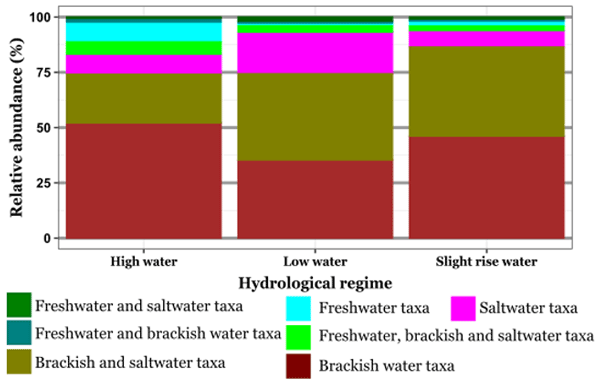
It is clearly shown in Fig. 2 that the taxa associated with brackish waters as well as those from brackish and salty environments significantly dominate during all the hydrological periods observed in Lake Nokoué. In contrast, freshwater benthic macroinvertebrate taxa only show a notable abundance during the High water period. A significant variation was noted between hydrological periods regarding the relative abundance of freshwater macroinvertebrates within Lake Nokoué (p<0.01).
The significant abundance of freshwater benthic macroinvertebrate taxa observed during the High water period is attributed to the remarkable proliferation of insects during this hydrological period (Gnohossou, 2006; Adandedjan, 2012; Odountan et al., 2019). Furthermore, Chaigneau et al. (2023) also reported a high density of freshwater zooplankton during the High water period in Lake Nokoué. This period is characterized by the complete desalination, an abundance of organic matter, and the proliferation of phytoplankton and macrophytes. These factors provide favorable conditions for the development of freshwater benthic macroinvertebrates. In contrast, the low water period is characterized by a noticeable increase in salinity and the disappearance of macrophytes. These conditions rather favor the establishment of benthic macroinvertebrates of brackish and saltwater. The high amplitude of salinity within Lake Nokoué would explain a significant variation in the abundance values of freshwater taxa between hydrological periods. According to Obolewski et al. (2018) and Mrozińska et al. (2021), salinity represents a stress factor for benthic invertebrates and significantly influences their distribution.
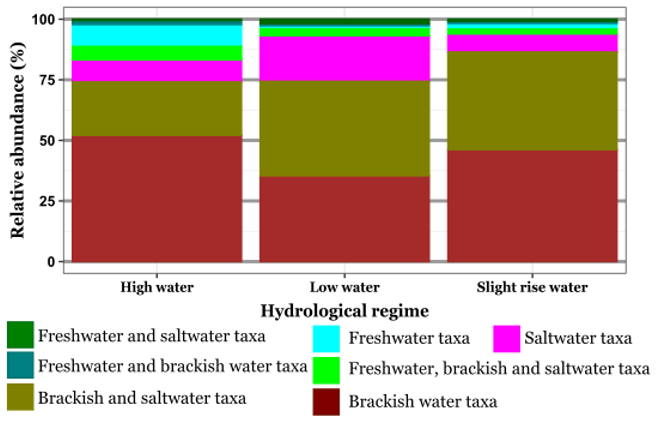
Figure 2Variation in the relative abundance (%) of benthic macroinvertebrates according to their preferred environment and hydrological regime in Lake Nokoué.
The analysis of Fig. 3 highlights that in the Porto-Novo Lagoon, freshwater and brackish taxa as well as those from brackish and salty waters are predominant during all hydrological periods. Furthermore, freshwater benthic macroinvertebrate taxa display a marked abundance during both high water and low water periods within this Lagoon. No significant variation was detected between hydrological periods in the Porto-Novo Lagoon in terms of the relative abundance of freshwater benthic macroinvertebrates (p>0.05).
Moreover, the notable abundance of freshwater benthic macroinvertebrate taxa during the low water period in the Porto-Novo Lagoon is explained by the persistent presence of insects during this hydrological period. Compared to Lake Nokoué, a low amplitude of salinity was observed. This would justify the absence of a significant variation in the abundance values of freshwater taxa between hydrological periods in Porto-Novo Lagoon.
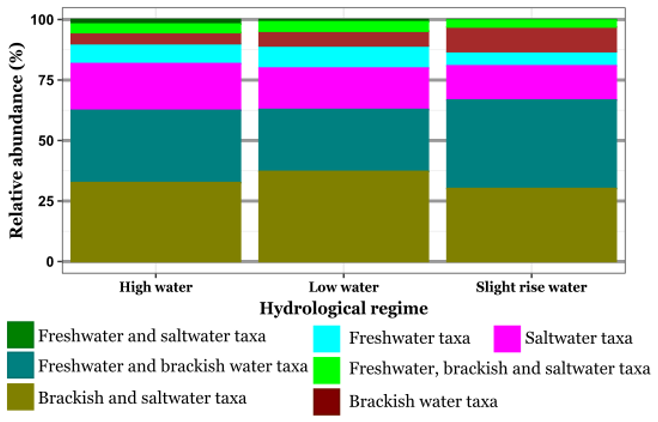
Figure 3Variation in the relative abundance (%) of benthic macroinvertebrates according to their preferred environment and hydrological regime in Porto-Novo Lagoon.
The results of this research highlighted the dynamics of freshwater benthic macroinvertebrates within the Lake Nokoué and Porto-Novo Lagoon complex. The saltwater intrusion influence the benthic macroinvertebrate communities. This intrusion affect negatively the structure of freshwater benthic macroinvertebrates. This influence is particularly pronounced in Lake Nokoué, compared to the Porto-Novo Lagoon, where a significant variation in the abundance of freshwater taxa has been observed depending on fluctuations in the hydrological regime.
It therefore appears crucial to continue this investigation by focusing on the dynamic study of benthic macroinvertebrate assemblages in the Lake Nokoué and Porto-Novo Lagoon complex.
Statistical analyses were conducted utilizing R software (version 4.2.2). Custom scripts employed in the analysis can be provided upon request from the corresponding author, as they incorporate site-specific data that are restricted from public dissemination.
Research data underpinning this study are available from the corresponding author upon reasonable request. Access to these data is limited due to local research agreements and confidentiality obligations.
RBL participated in all steps of the completion of this work. MONCK participated in the fieldwork. SHZT contributed to the reading of the manuscript. YA ensured the overall supervision of this research.
The contact author has declared that none of the authors has any competing interests.
Publisher's note: Copernicus Publications remains neutral with regard to jurisdictional claims made in the text, published maps, institutional affiliations, or any other geographical representation in this paper. While Copernicus Publications makes every effort to include appropriate place names, the final responsibility lies with the authors. Views expressed in the text are those of the authors and do not necessarily reflect the views of the publisher.
This article is part of the special issue “Circular Economy and Technological Innovations for Resilient Water and Sanitation Systems in Africa”. It is a result of the 1st Edition of the C2EA Water and Sanitation Week on the Circular Economy and Technological Innovations, Cotonou, Benin, 3–6 December 2024.
The authors express their profound gratitude to the African Center of Excellence for Water and Sanitation at the National Water Institute of the University of Abomey-Calavi for its financial support. Additionally, we extend our appreciation to the team at the Laboratory of Ecology and Management of Aquatic Ecosystems at the University of Abomey-Calavi for their contributions to fieldwork, as well as chemical and hydrobiological analyses.
This research was funded by the African Centre of Excellence for Water and Sanitation (C2EA) at the University of Abomey-Calavi in Benin.
This paper was edited by Moctar Dembélé and reviewed by Sèlomè Wilfried Sintondji and one anonymous referee.
Adandedjan, D.: Diversité et déterminisme des peuplements de macroinvertébrés benthiques de deux lagunes du Sud- Bénin: La Lagune de Porto-Novo et la lagune Côtière, Thèse de doctorat, Université d'Abomey-Calavi, Bénin, 261 pp., 2012.
Adandedjan, D., Lalèyè, P., Ouattara, A., and Gourène, G.: Distribution of Benthic Insect Fauna in a West African Lagoon: The Porto-Novo Lagoon in Benin, Asian Journal of Biological Sciences, 4, 116–117, https://doi.org/10.3923/ajbs.2011.116.127, 2011.
Capo-Chichi, H. B. P., Adandedjan, D., Houelome, T. M. A., and Laleye, P.: Physico-chimie et pollution organique du lac Nokoué au Sud du Bénin, Journal of Applied Biosciences, 170, 233264, https://www.ajol.info/index.php/jab/article/view/233264/220340 (last access: 09 December 2025), 2022.
Chaigneau, A., Ouinsou, F. T., Akodogbo, H. H., Dobigny, G., Avocegan, T. T., Dossou-Sognon, F. U., Okpeitcha, V. O., Djihouessi, M. B., and Azémar, F.: Physicochemical Drivers of Zooplankton Seasonal Variability in a West African Lagoon (Nokoué Lagoon, Benin), Journal of Marine Science and Engineering, 11, 556, https://doi.org/10.3390/jmse11030556, 2023.
Djihouessi, M. B.: Nutrient budget approach for the management of eutrophication and ecosystem services of Lake Nokoué, PhD thesis, University of Abomey-Calavi, 173 pp., 2018.
Djihouessi, M. B., Djihouessi, M. B., and Aina, M. P. A: Review of habitat and biodiversity research in Lake Nokoué, Benin Republic: Current state of knowledge and prospects for further research, Ecohydrology & Hydrobiology, 19, 131–145, https://doi.org/10.1016/j.ecohyd.2018.04.003, 2019.
Djihouessi, M., Houngue, R., Adandedji, F., and Sintondji, L.: Toward the understanding of saline water intrusion and nutrient flushing in Lake Nokoué, EarthArXiv [preprint], https://doi.org/10.31223/X5105M, 2021.
Fry, C.: Field to the freshwater macroinvertebrates of Southern Africa, Jacana Media, South Africa, 221 pp., ISBN 978-1-4314-3105-2, 2021.
Gnohossou, P.: La faune benthique d'une lagune ouest africaine (le lac Nokoué au Bénin), diversité, abondance, variations temporelles et spatiales, place dans la chaîne trophique, Thèse de doctorat, Institut National Polytechnique de Toulouse, France, 169 pp., 2006.
Kefford, B. J., Buchwalter, D., Cañedo-Argüelles, M., Davis, J., Duncan, R. P., Hoffmann, A., and Thompson, R.: Salinized rivers: Degraded systems or new habitats for salt-tolerant faunas?, Biology Letters, 12, 20151072, https://doi.org/10.1098/rsbl.2015.1072, 2016.
Kpanou, S. B.-V. K., Kpenavoun Chogou, S., Hounnou, F. E., Aoudji, A. K. N., Lalèyè, P. A., Dedehouanou, H., and Dogot, T.: Drivers of Small-Scale Fishers' Willingness to Adopt Property Rights Co-Management in the Lake Nokoué and Porto-Novo Lagoon Complex in Southeast Benin, Fishes, 7, 249, https://doi.org/10.3390/fishes7050249, 2022.
Lalèyè, P., Niyonkuru, C., Moreau, J., and Teugels, G.: Spatial and seasonal distribution of the ichthyofauna of Lake Nokoué, Bénin, West Africa, African Journal of Aquatic Science, 28, 151–161, https://doi.org/10.2989/16085910309503779, 2003.
Lederoun, D., Amoussou, G., Vodougnon, H., Adjibogoun, D., and Lalèyè, P.: Spatial and temporal patterns of fish assemblages in Lake Nokoué and the Porto-Novo Lagoon (Benin, West Africa), Fisheries & Aquatic Life, 32, 9–25, https://doi.org/10.2478/aopf-2024-0002, 2024.
Lingofo, R. B., Chabi Kpera, M. O. N., Ewedje, E. L., Zébazé, S. H. T., Mama, D., and Abou, Y.: Dynamic of eutrophication in a coastal shallow lagoon, Lake Nokoué in Benin (West Africa), Journal of Materials and Environmental Sciences, 15, 1760–1775, 2024.
Lingofo, R. B., Chabi Kpera, M. O. N., Boukari, O. T., Zébazé, S. H. T., Ghamizi, M., and Abou, Y.: Dynamic of organic pollution in two Benin coastal lagoons, Lake Nokoué and Porto-Novo lagoon (Ramsar site 1018), International Journal of Biological and Chemical Sciences, 19, 797–810, 2025.
Mrozińska, N., Glińska-Lewczuk, K., and Obolewski, K.: Salinity as a Key Factor on the Benthic Fauna Diversity in the Coastal Lakes, Animals, 11, 3039, https://doi.org/10.3390/ani11113039, 2021.
Nicklès, M.: Mollusques testacés marins de la côte occidentale d'Afrique: Vol. II, Manuels Ouest- Africains, 269 pp., ISBN 9782402530606, 1950.
Ntangyong, I. L., Chaigneau, A., Morel, Y., Assogba, A., Okpeitcha, V. O., Duhaut, T., Stieglitz, T., Van Beek, P., Baloitcha, E., Sohou, Z., Houssou, V. M. C., and Ouillon, S.: Seasonal and interannual variations of suspended particulate matter in a West-African lagoon (Nokoué lagoon, Benin): Impact of rivers and wind, Estuarine, Coastal and Shelf Science, 304, 108821, https://doi.org/10.1016/j.ecss.2024.108821, 2024.
Obolewski, K., Glińska-Lewczuk, K., and Astel, A.: Lost connectivity between a coastal lagoon and the sea – implications of floodgate closure for benthic macroinvertebrates, Estuarine, Coastal and Shelf Science, 211, 77–89, https://doi.org/10.1016/j.ecss.2018.02.012, 2018.
Odountan, O., De Bisthoven, L. J., Koudenoukpo, C., and Abou, Y.: Spatio-temporal variation of environmental variables and aquatic macroinvertebrate assemblages in Lake Nokoué, a RAMSAR site of Benin, African Journal of Aquatic Science, 44, 219–231, https://doi.org/10.2989/16085914.2019.1629272, 2019.
Okpeitcha, O. V., Chaigneau, A., Morel, Y., Stieglitz, T., Pomalegni, Y., Sohou, Z., and Mama, D.: Seasonal and interannual variability of salinity in a large West-African lagoon (Nokoué Lagoon, Benin), Estuarine, Coastal and Shelf Science, 264, 107689, https://doi.org/10.1016/j.ecss.2021.107689, 2022.
Sintondji, S. W., Gozingan, A. S., Sohou, Z., Taymans, M., Baetens, K., Lacroix, G., and Fiogbé, E. D.: Prediction of the distribution of shrimp species found in southern Benin through the lake Nokoué-Ocean complex. Journal of Aquaculture, Marine Biology & Ecology, 2022, https://doi.org/10.37722/JAMBE.2022201, 2022a.
Sintondji, S. W., Sohou, Z., Baetens, K., Lacroix, G., and Fiogbé, E. D.: Characterization of a West African Coastal Lagoon System: Case of Lake Nokoué with Its Inlet (Cotonou, South Benin), Ecologies, 3, 467–479, https://doi.org/10.3390/ecologies3040033, 2022b.
Sintondji, S. W., Sohou, Z., Goussanou, A., Godome, T., Baetens, K., Lacroix, G., and Fiogbé, E. D.: Distribution model of shrimp species in Lake Nokoué, southern Benin, West Africa, Crustaceana, 96, 605–625, https://doi.org/10.1163/15685403-bja10304, 2023.
Socohou, A. A., Djihouessi, M. B., Tigo, B. A., Viainon, V. M., Adandedji, F. M., Adounpke, J., and Aina, M. P.: Spatio-temporal dynamics of nutrients at the water-sediment interface: Case of the Nokoue lagoon in Southern Benin, Environmental Monitoring and Assessment, 196, 2, https://doi.org/10.1007/s10661-023-12115-7, 2024.
Tachet, H., Richoux, P., Bournaud, M., and Usseglio-Polatera, P.: Invertébrés d'eau douce: Systématique, biologie, écologie, CNRS, Paris, 537 pp., ISBN 9782271069450, 2010.
Timpano, A. J., Schoenholtz, S. H., Soucek, D. J., and Zipper, C. E.: Benthic macroinvertebrate community response to salinization in headwater streams in Appalachia USA over multiple years, Ecological Indicators, 91, 645–656, https://doi.org/10.1016/j.ecolind.2018.04.031, 2018.
Van Diggelen, A. D. and Montagna, P. A.: Is Salinity Variability a Benthic Disturbance in Estuaries?, Estuaries and Coasts, 39, 967–980, https://doi.org/10.1007/s12237-015-0058-9, 2016.
Wan, X., Fang, Y., Jiang, Y., Lu, X., Zhu, L., and Feng, J.: Temperature and nutrients alter the relative importance of stochastic and deterministic processes in the coastal macroinvertebrates biodiversity assembly on long-time scales, Ecology and Evolution, 14, e11062, https://doi.org/10.1002/ece3.11062, 2024.
Yehouenou, E. A. P., Adamou, R., Azehoun, P. J., Edorh, P. A., and Ahoyo, T.: Monitoring of Heavy Metals in the complex “Nokoué lake-Cotonou and Porto-Novo lagoon” ecosystem during three years in the Republic of Benin, Research Journal of Chemical Sciences, 3, 1–7, 2013.
Zandagba, J., Adandedji, F. M., Mama, D., Chabi, A., and Afouda, A.: Assessment of the Physico-Chemical Pollution of a Water Body in a Perspective of Integrated Water Resource Management: Case Study of Nokoué Lake, Journal of Environmental Protection, 07, 656–669, https://doi.org/10.4236/jep.2016.75059, 2016.