Articles | Volume 385
https://doi.org/10.5194/piahs-385-1-2024
© Author(s) 2024. This work is distributed under
the Creative Commons Attribution 4.0 License.
https://doi.org/10.5194/piahs-385-1-2024
© Author(s) 2024. This work is distributed under
the Creative Commons Attribution 4.0 License.
The hydrological system as a living organism

Hubert H. G. Savenije
CORRESPONDING AUTHOR
Water Resources Department, Delft University of Technology, Delft, the Netherlands
Related authors
Hongkai Gao, Markus Hrachowitz, Lan Wang-Erlandsson, Fabrizio Fenicia, Qiaojuan Xi, Jianyang Xia, Wei Shao, Ge Sun, and Hubert H. G. Savenije
Hydrol. Earth Syst. Sci., 28, 4477–4499, https://doi.org/10.5194/hess-28-4477-2024, https://doi.org/10.5194/hess-28-4477-2024, 2024
Short summary
Short summary
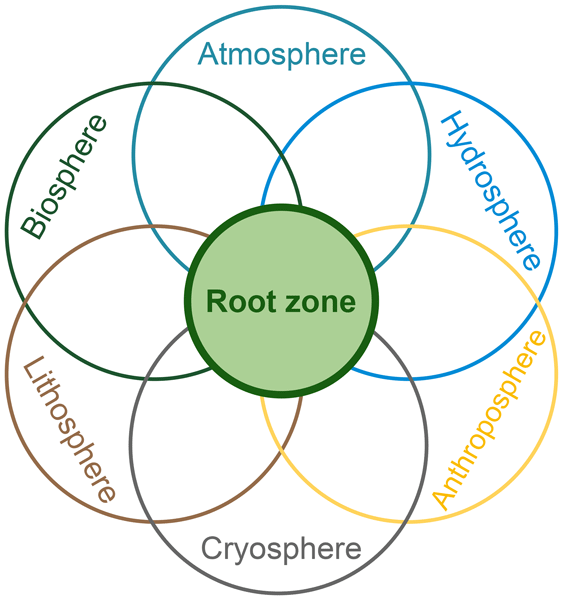
The concept of the root zone is widely used but lacks a precise definition. Its importance in Earth system science is not well elaborated upon. Here, we clarified its definition with several similar terms to bridge the multi-disciplinary gap. We underscore the key role of the root zone in the Earth system, which links the biosphere, hydrosphere, lithosphere, atmosphere, and anthroposphere. To better represent the root zone, we advocate for a paradigm shift towards ecosystem-centred modelling.
Henry M. Zimba, Miriam Coenders-Gerrits, Kawawa E. Banda, Petra Hulsman, Nick van de Giesen, Imasiku A. Nyambe, and Hubert H. G. Savenije
Hydrol. Earth Syst. Sci., 28, 3633–3663, https://doi.org/10.5194/hess-28-3633-2024, https://doi.org/10.5194/hess-28-3633-2024, 2024
Short summary
Short summary
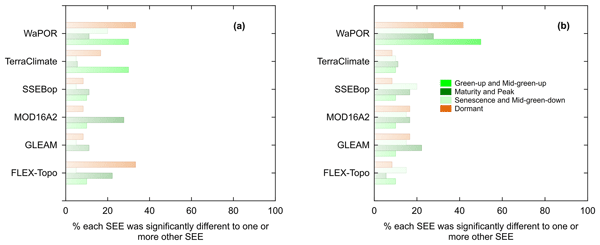
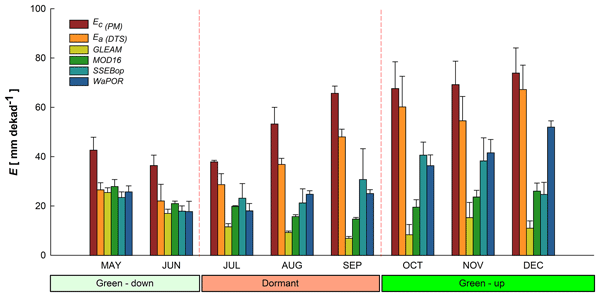
The fall and flushing of new leaves in the miombo woodlands co-occur in the dry season before the commencement of seasonal rainfall. The miombo species are also said to have access to soil moisture in deep soils, including groundwater in the dry season. Satellite-based evaporation estimates, temporal trends, and magnitudes differ the most in the dry season, most likely due to inadequate understanding and representation of the highlighted miombo species attributes in simulations.
Jiaxing Liang, Hongkai Gao, Fabrizio Fenicia, Qiaojuan Xi, Yahui Wang, and Hubert H. G. Savenije
EGUsphere, https://doi.org/10.5194/egusphere-2024-550, https://doi.org/10.5194/egusphere-2024-550, 2024
Preprint archived
Short summary
Short summary
The root zone storage capacity (Sumax) is a key element in hydrology and land-atmospheric interaction. In this study, we utilized a hydrological model and a dynamic parameter identification method, to quantify the temporal trends of Sumax for 497 catchments in the USA. We found that 423 catchments (85 %) showed increasing Sumax, which averagely increased from 178 to 235 mm between 1980 and 2014. The increasing trend was also validated by multi-sources data and independent methods.
Hubert T. Samboko, Sten Schurer, Hubert H. G. Savenije, Hodson Makurira, Kawawa Banda, and Hessel Winsemius
Geosci. Instrum. Method. Data Syst., 12, 155–169, https://doi.org/10.5194/gi-12-155-2023, https://doi.org/10.5194/gi-12-155-2023, 2023
Short summary
Short summary
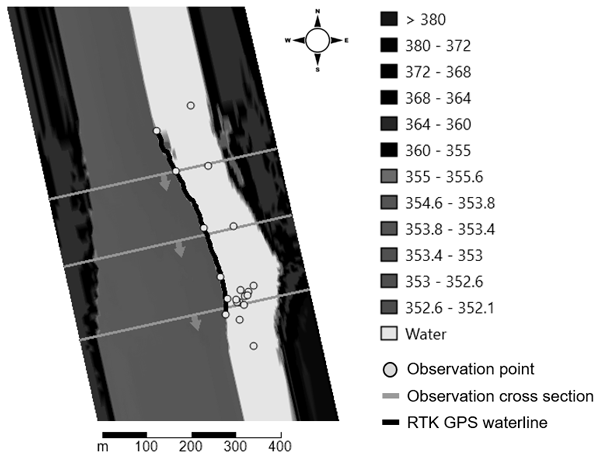
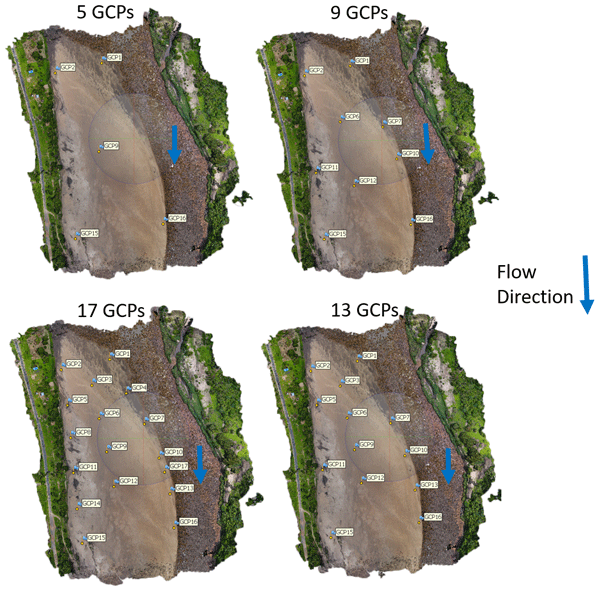
The study investigates how low-cost technology can be applied in data-scarce catchments to improve water resource management. More specifically, we investigate how drone technology can be combined with low-cost real-time kinematic positioning (RTK) global navigation satellite system (GNSS) equipment and subsequently applied to a 3D hydraulic model so as to generate more physically based rating curves.
Hongkai Gao, Fabrizio Fenicia, and Hubert H. G. Savenije
Hydrol. Earth Syst. Sci., 27, 2607–2620, https://doi.org/10.5194/hess-27-2607-2023, https://doi.org/10.5194/hess-27-2607-2023, 2023
Short summary
Short summary
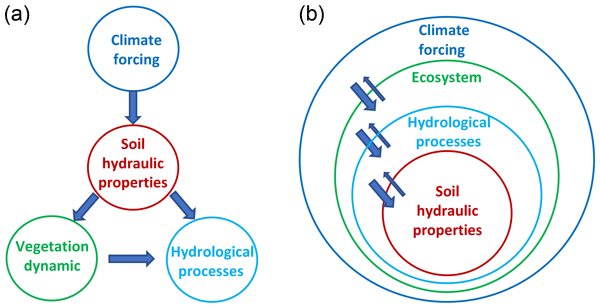
It is a deeply rooted perception that soil is key in hydrology. In this paper, we argue that it is the ecosystem, not the soil, that is in control of hydrology. Firstly, in nature, the dominant flow mechanism is preferential, which is not particularly related to soil properties. Secondly, the ecosystem, not the soil, determines the land–surface water balance and hydrological processes. Moving from a soil- to ecosystem-centred perspective allows more realistic and simpler hydrological models.
Nutchanart Sriwongsitanon, Wasana Jandang, James Williams, Thienchart Suwawong, Ekkarin Maekan, and Hubert H. G. Savenije
Hydrol. Earth Syst. Sci., 27, 2149–2171, https://doi.org/10.5194/hess-27-2149-2023, https://doi.org/10.5194/hess-27-2149-2023, 2023
Short summary
Short summary
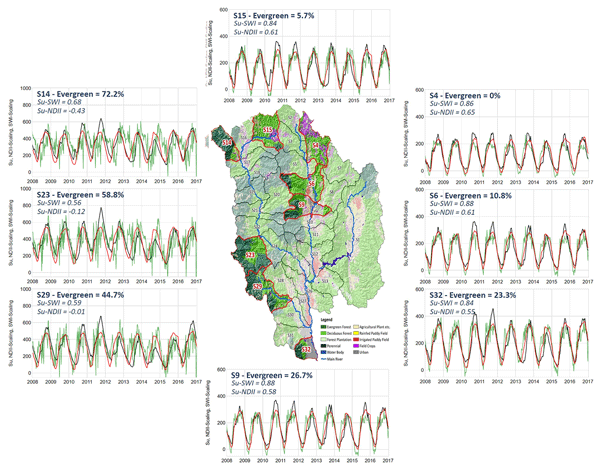
We developed predictive semi-distributed rainfall–runoff models for nested sub-catchments in the upper Ping basin, which yielded better or similar performance compared to calibrated lumped models. The normalised difference infrared index proves to be an effective proxy for distributed root zone moisture capacity over sub-catchments and is well correlated with the percentage of evergreen forest. In validation, soil moisture simulations appeared to be highly correlated with the soil wetness index.
Henry Zimba, Miriam Coenders-Gerrits, Kawawa Banda, Bart Schilperoort, Nick van de Giesen, Imasiku Nyambe, and Hubert H. G. Savenije
Hydrol. Earth Syst. Sci., 27, 1695–1722, https://doi.org/10.5194/hess-27-1695-2023, https://doi.org/10.5194/hess-27-1695-2023, 2023
Short summary
Short summary
Miombo woodland plants continue to lose water even during the driest part of the year. This appears to be facilitated by the adapted features such as deep rooting (beyond 5 m) with access to deep soil moisture, potentially even ground water. It appears the trend and amount of water that the plants lose is correlated more to the available energy. This loss of water in the dry season by miombo woodland plants appears to be incorrectly captured by satellite-based evaporation estimates.
Hongkai Gao, Chuntan Han, Rensheng Chen, Zijing Feng, Kang Wang, Fabrizio Fenicia, and Hubert Savenije
Hydrol. Earth Syst. Sci., 26, 4187–4208, https://doi.org/10.5194/hess-26-4187-2022, https://doi.org/10.5194/hess-26-4187-2022, 2022
Short summary
Short summary
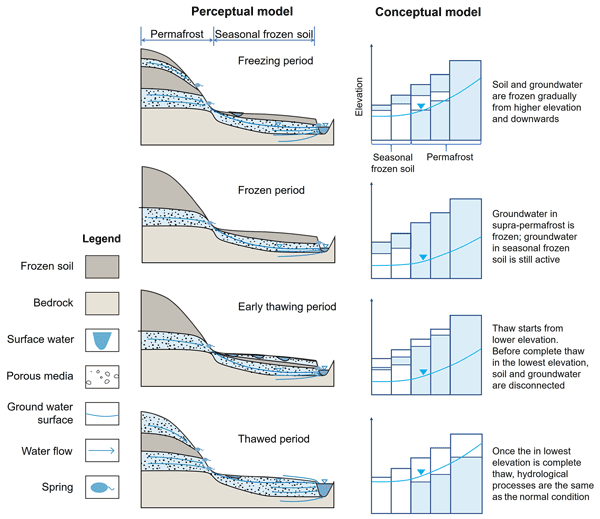
Frozen soil hydrology is one of the 23 unsolved problems in hydrology (UPH). In this study, we developed a novel conceptual frozen soil hydrological model, FLEX-Topo-FS. The model successfully reproduced the soil freeze–thaw process, and its impacts on hydrologic connectivity, runoff generation, and groundwater. We believe this study is a breakthrough for the 23 UPH, giving us new insights on frozen soil hydrology, with broad implications for predicting cold region hydrology in future.
Henry Zimba, Miriam Coenders-Gerrits, Kawawa Banda, Petra Hulsman, Nick van de Giesen, Imasiku Nyambe, and Hubert Savenije
Hydrol. Earth Syst. Sci. Discuss., https://doi.org/10.5194/hess-2022-114, https://doi.org/10.5194/hess-2022-114, 2022
Manuscript not accepted for further review
Short summary
Short summary
We compare performance of evaporation models in the Luangwa Basin located in a semi-arid and complex Miombo ecosystem in Africa. Miombo plants changes colour, drop off leaves and acquire new leaves during the dry season. In addition, the plant roots go deep in the soil and appear to access groundwater. Results show that evaporation models with structure and process that do not capture this unique plant structure and behaviour appears to have difficulties to correctly estimating evaporation.
Laurène J. E. Bouaziz, Emma E. Aalbers, Albrecht H. Weerts, Mark Hegnauer, Hendrik Buiteveld, Rita Lammersen, Jasper Stam, Eric Sprokkereef, Hubert H. G. Savenije, and Markus Hrachowitz
Hydrol. Earth Syst. Sci., 26, 1295–1318, https://doi.org/10.5194/hess-26-1295-2022, https://doi.org/10.5194/hess-26-1295-2022, 2022
Short summary
Short summary
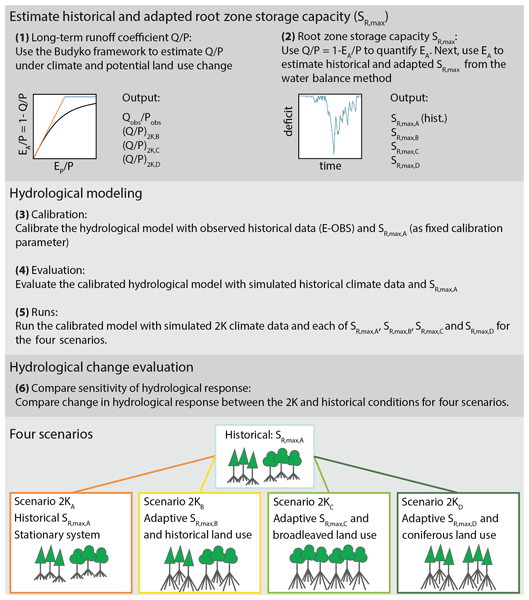
Assuming stationarity of hydrological systems is no longer appropriate when considering land use and climate change. We tested the sensitivity of hydrological predictions to changes in model parameters that reflect ecosystem adaptation to climate and potential land use change. We estimated a 34 % increase in the root zone storage parameter under +2 K global warming, resulting in up to 15 % less streamflow in autumn, due to 14 % higher summer evaporation, compared to a stationary system.
Hubert T. Samboko, Sten Schurer, Hubert H. G. Savenije, Hodson Makurira, Kawawa Banda, and Hessel Winsemius
Geosci. Instrum. Method. Data Syst., 11, 1–23, https://doi.org/10.5194/gi-11-1-2022, https://doi.org/10.5194/gi-11-1-2022, 2022
Short summary
Short summary
The study was conducted along the Luangwa River in Zambia. It combines low-cost instruments such as UAVs and GPS kits to collect data for the purposes of water management. A novel technique which seamlessly merges the dry and wet bathymetry before application in a hydraulic model was applied. Successful implementation resulted in water authorities with small budgets being able to monitor flows safely and efficiently without significant compromise on accuracy.
Hongkai Gao, Markus Hrachowitz, Lan Wang-Erlandsson, Fabrizio Fenicia, Qiaojuan Xi, Jianyang Xia, Wei Shao, Ge Sun, and Hubert H. G. Savenije
Hydrol. Earth Syst. Sci., 28, 4477–4499, https://doi.org/10.5194/hess-28-4477-2024, https://doi.org/10.5194/hess-28-4477-2024, 2024
Short summary
Short summary
The concept of the root zone is widely used but lacks a precise definition. Its importance in Earth system science is not well elaborated upon. Here, we clarified its definition with several similar terms to bridge the multi-disciplinary gap. We underscore the key role of the root zone in the Earth system, which links the biosphere, hydrosphere, lithosphere, atmosphere, and anthroposphere. To better represent the root zone, we advocate for a paradigm shift towards ecosystem-centred modelling.
Henry M. Zimba, Miriam Coenders-Gerrits, Kawawa E. Banda, Petra Hulsman, Nick van de Giesen, Imasiku A. Nyambe, and Hubert H. G. Savenije
Hydrol. Earth Syst. Sci., 28, 3633–3663, https://doi.org/10.5194/hess-28-3633-2024, https://doi.org/10.5194/hess-28-3633-2024, 2024
Short summary
Short summary
The fall and flushing of new leaves in the miombo woodlands co-occur in the dry season before the commencement of seasonal rainfall. The miombo species are also said to have access to soil moisture in deep soils, including groundwater in the dry season. Satellite-based evaporation estimates, temporal trends, and magnitudes differ the most in the dry season, most likely due to inadequate understanding and representation of the highlighted miombo species attributes in simulations.
Jiaxing Liang, Hongkai Gao, Fabrizio Fenicia, Qiaojuan Xi, Yahui Wang, and Hubert H. G. Savenije
EGUsphere, https://doi.org/10.5194/egusphere-2024-550, https://doi.org/10.5194/egusphere-2024-550, 2024
Preprint archived
Short summary
Short summary
The root zone storage capacity (Sumax) is a key element in hydrology and land-atmospheric interaction. In this study, we utilized a hydrological model and a dynamic parameter identification method, to quantify the temporal trends of Sumax for 497 catchments in the USA. We found that 423 catchments (85 %) showed increasing Sumax, which averagely increased from 178 to 235 mm between 1980 and 2014. The increasing trend was also validated by multi-sources data and independent methods.
Hubert T. Samboko, Sten Schurer, Hubert H. G. Savenije, Hodson Makurira, Kawawa Banda, and Hessel Winsemius
Geosci. Instrum. Method. Data Syst., 12, 155–169, https://doi.org/10.5194/gi-12-155-2023, https://doi.org/10.5194/gi-12-155-2023, 2023
Short summary
Short summary
The study investigates how low-cost technology can be applied in data-scarce catchments to improve water resource management. More specifically, we investigate how drone technology can be combined with low-cost real-time kinematic positioning (RTK) global navigation satellite system (GNSS) equipment and subsequently applied to a 3D hydraulic model so as to generate more physically based rating curves.
Hongkai Gao, Fabrizio Fenicia, and Hubert H. G. Savenije
Hydrol. Earth Syst. Sci., 27, 2607–2620, https://doi.org/10.5194/hess-27-2607-2023, https://doi.org/10.5194/hess-27-2607-2023, 2023
Short summary
Short summary
It is a deeply rooted perception that soil is key in hydrology. In this paper, we argue that it is the ecosystem, not the soil, that is in control of hydrology. Firstly, in nature, the dominant flow mechanism is preferential, which is not particularly related to soil properties. Secondly, the ecosystem, not the soil, determines the land–surface water balance and hydrological processes. Moving from a soil- to ecosystem-centred perspective allows more realistic and simpler hydrological models.
Nutchanart Sriwongsitanon, Wasana Jandang, James Williams, Thienchart Suwawong, Ekkarin Maekan, and Hubert H. G. Savenije
Hydrol. Earth Syst. Sci., 27, 2149–2171, https://doi.org/10.5194/hess-27-2149-2023, https://doi.org/10.5194/hess-27-2149-2023, 2023
Short summary
Short summary
We developed predictive semi-distributed rainfall–runoff models for nested sub-catchments in the upper Ping basin, which yielded better or similar performance compared to calibrated lumped models. The normalised difference infrared index proves to be an effective proxy for distributed root zone moisture capacity over sub-catchments and is well correlated with the percentage of evergreen forest. In validation, soil moisture simulations appeared to be highly correlated with the soil wetness index.
Henry Zimba, Miriam Coenders-Gerrits, Kawawa Banda, Bart Schilperoort, Nick van de Giesen, Imasiku Nyambe, and Hubert H. G. Savenije
Hydrol. Earth Syst. Sci., 27, 1695–1722, https://doi.org/10.5194/hess-27-1695-2023, https://doi.org/10.5194/hess-27-1695-2023, 2023
Short summary
Short summary
Miombo woodland plants continue to lose water even during the driest part of the year. This appears to be facilitated by the adapted features such as deep rooting (beyond 5 m) with access to deep soil moisture, potentially even ground water. It appears the trend and amount of water that the plants lose is correlated more to the available energy. This loss of water in the dry season by miombo woodland plants appears to be incorrectly captured by satellite-based evaporation estimates.
Hongkai Gao, Chuntan Han, Rensheng Chen, Zijing Feng, Kang Wang, Fabrizio Fenicia, and Hubert Savenije
Hydrol. Earth Syst. Sci., 26, 4187–4208, https://doi.org/10.5194/hess-26-4187-2022, https://doi.org/10.5194/hess-26-4187-2022, 2022
Short summary
Short summary
Frozen soil hydrology is one of the 23 unsolved problems in hydrology (UPH). In this study, we developed a novel conceptual frozen soil hydrological model, FLEX-Topo-FS. The model successfully reproduced the soil freeze–thaw process, and its impacts on hydrologic connectivity, runoff generation, and groundwater. We believe this study is a breakthrough for the 23 UPH, giving us new insights on frozen soil hydrology, with broad implications for predicting cold region hydrology in future.
Henry Zimba, Miriam Coenders-Gerrits, Kawawa Banda, Petra Hulsman, Nick van de Giesen, Imasiku Nyambe, and Hubert Savenije
Hydrol. Earth Syst. Sci. Discuss., https://doi.org/10.5194/hess-2022-114, https://doi.org/10.5194/hess-2022-114, 2022
Manuscript not accepted for further review
Short summary
Short summary
We compare performance of evaporation models in the Luangwa Basin located in a semi-arid and complex Miombo ecosystem in Africa. Miombo plants changes colour, drop off leaves and acquire new leaves during the dry season. In addition, the plant roots go deep in the soil and appear to access groundwater. Results show that evaporation models with structure and process that do not capture this unique plant structure and behaviour appears to have difficulties to correctly estimating evaporation.
Laurène J. E. Bouaziz, Emma E. Aalbers, Albrecht H. Weerts, Mark Hegnauer, Hendrik Buiteveld, Rita Lammersen, Jasper Stam, Eric Sprokkereef, Hubert H. G. Savenije, and Markus Hrachowitz
Hydrol. Earth Syst. Sci., 26, 1295–1318, https://doi.org/10.5194/hess-26-1295-2022, https://doi.org/10.5194/hess-26-1295-2022, 2022
Short summary
Short summary
Assuming stationarity of hydrological systems is no longer appropriate when considering land use and climate change. We tested the sensitivity of hydrological predictions to changes in model parameters that reflect ecosystem adaptation to climate and potential land use change. We estimated a 34 % increase in the root zone storage parameter under +2 K global warming, resulting in up to 15 % less streamflow in autumn, due to 14 % higher summer evaporation, compared to a stationary system.
Hubert T. Samboko, Sten Schurer, Hubert H. G. Savenije, Hodson Makurira, Kawawa Banda, and Hessel Winsemius
Geosci. Instrum. Method. Data Syst., 11, 1–23, https://doi.org/10.5194/gi-11-1-2022, https://doi.org/10.5194/gi-11-1-2022, 2022
Short summary
Short summary
The study was conducted along the Luangwa River in Zambia. It combines low-cost instruments such as UAVs and GPS kits to collect data for the purposes of water management. A novel technique which seamlessly merges the dry and wet bathymetry before application in a hydraulic model was applied. Successful implementation resulted in water authorities with small budgets being able to monitor flows safely and efficiently without significant compromise on accuracy.
Cited articles
Beven, K. J.: Rainfall-runoff modelling: the primer, John Wiley & Sons, 2011.
Blöschl, G., Bierkens, M. F., Chambel, A., et al.: Twenty-three unsolved problems in hydrology (UPH) – a community perspective, Hydrolog. Sci. J., 64, 1141–1158, 2019.
Bouaziz, L. J. E., Steele-Dunne, S. C., Schellekens, J., Weerts, A. H., Stam, J., Sprokkereef, E., Winsemius, H., Savenije, H., and Hrachowitz, M.: Improved understanding of the link between catchment-scale vegetation accessible storage and satellite-derived Soil Water Index, Water Resour. Res., 56, e2019WR026365, https://doi.org/10.1029/2019WR026365, 2020.
Bouaziz, L. J. E., Aalbers, E. E., Weerts, A. H., Hegnauer, M., Buiteveld, H., Lammersen, R., Stam, J., Sprokkereef, E., Savenije, H. H. G., and Hrachowitz, M.: Ecosystem adaptation to climate change: the sensitivity of hydrological predictions to time-dynamic model parameters, Hydrol. Earth Syst. Sci., 26, 1295–1318, https://doi.org/10.5194/hess-26-1295-2022, 2022.
De Boer-Euser, T., McMillan, H. K., Hrachowitz, M., Winsemius, H. C., and Savenije, H. H. G.: Influence of soil and climate on root zone storage capacity, Water Resour. Res., 52, 2009–2024, 2016.
Dooge, J. C. I.: Looking for hydrologic laws, Water Resour. Res., 22, 46S–58S, 1986.
Dooge, J. C. I.: Searching for simplicity in hydrology, Surv. Geophys., 18, 511–534, 1997.
Fenicia F., Kavetski, D., Savenije, H. H. G., Clark, M. P., Schoups, G., Pfister, L., and Freer, J.: Catchment properties, function, and conceptual model representation: is there a correspondence?, Hydrol. Process., 28, 2451–2467, 2014.
Gao, H., Hrachowitz, M., Schymanski, S. J., Fenicia, F., Sriwongsitanon, N., and Savenije, H. H. G.: Climate controls how ecosystems size the root zone storage capacity at catchment scale, Geophys. Res. Lett., 41, 7916–7923, 2014a.
Gao, H., Hrachowitz, M., Fenicia, F., Gharari, S., and Savenije, H. H. G.: Testing the realism of a topography-driven model (FLEX-Topo) in the nested catchments of the Upper Heihe, China, Hydrol. Earth Syst. Sci., 18, 1895–1915, https://doi.org/10.5194/hess-18-1895-2014, 2014b.
Gao, H., Birkel, C., Hrachowitz, M., Tetzlaff, D., Soulsby, C., and Savenije, H. H. G.: A simple topography-driven and calibration-free runoff generation module, Hydrol. Earth Syst. Sci., 23, 787–809, https://doi.org/10.5194/hess-23-787-2019, 2019.
Gharari, S., Hrachowitz, M., Fenicia, F., and Savenije, H. H. G.: Hydrological landscape classification: investigating the performance of HAND based landscape classifications in a central European meso-scale catchment, Hydrol. Earth Syst. Sci., 15, 3275–3291, https://doi.org/10.5194/hess-15-3275-2011, 2011.
Kleidon, A.: Thermodynamic foundations of the Earth system, Cambridge University Press, Cambridge, 2016.
Kleidon, A., Zehe, E., Ehret, U., and Scherer, U.: Thermodynamics, maximum power, and the dynamics of preferential river flow structures at the continental scale, Hydrol. Earth Syst. Sci., 17, 225–251, https://doi.org/10.5194/hess-17-225-2013, 2013.
Mao, G. and Liu, J.: WAYS v1: a hydrological model for root zone water storage simulation on a global scale, Geosci. Model Dev., 12, 5267–5289, https://doi.org/10.5194/gmd-12-5267-2019, 2019.
McDonnell, J. J., Sivapalan, M., Vaché, K., et al.: Moving beyond heterogeneity and process complexity: A new vision for watershed hydrology, Water Resour. Res., 43, W07301, 2007.
Montanari, A., Young, G., Savenije, H. H. G., et al.: “Panta Rhei, Everything Flows”: Change in hydrology and society; The IAHS Scientific Decade 2013–2022, Hydrolog. Sci. J., 58, 1256–1275, 2013.
Nijzink, R., Hutton, C., Pechlivanidis, I., Capell, R., Arheimer, B., Freer, J., Han, D., Wagener, T., McGuire, K., Savenije, H., and Hrachowitz, M.: The evolution of root-zone moisture capacities after deforestation: a step towards hydrological predictions under change?, Hydrol. Earth Syst. Sci., 20, 4775–4799, https://doi.org/10.5194/hess-20-4775-2016, 2016.
Savenije, H. H. G.: HESS Opinions “Topography driven conceptual modelling (FLEX-Topo)”, Hydrol. Earth Syst. Sci., 14, 2681–2692, https://doi.org/10.5194/hess-14-2681-2010, 2010.
Savenije, H. H. G. and Hrachowitz, M.: HESS Opinions “Catchments as meta-organisms – a new blueprint for hydrological modelling”, Hydrol. Earth Syst. Sci., 21, 1107–1116, https://doi.org/10.5194/hess-21-1107-2017, 2017.
Sivapalan, M., Savenije, H. H. G., and Bloeschl, G.: Socio-hydrology: A new science of people and water, Hydrol. Process., 26, 1270–1276, 2012.
Wang-Erlandsson, L., Bastiaanssen, W. G. M., Gao, H., Jägermeyr, J., Senay, G. B., van Dijk, A. I. J. M., Guerschman, J. P., Keys, P. W., Gordon, L. J., and Savenije, H. H. G.: Global root zone storage capacity from satellite-based evaporation, Hydrol. Earth Syst. Sci., 20, 1459–1481, https://doi.org/10.5194/hess-20-1459-2016, 2016.
Wulf, A.: The Invention of Nature. Alexander von Humboldt's New World, John Murray Publ., London, 2015.
Short summary
Hydrology is the bloodstream of the Earth, acting as a living organism, with the ecosystem as its active agent. The ecosystem optimises its survival within the constraints of energy, water, climate and nutrients. It is capable of adjusting the hydrological system and, through evolution, adjust its efficiency of carbon sequestration and moisture uptake. In trying to understand future functioning of hydrology, we have to take into account the adaptability of the ecosystem.
Hydrology is the bloodstream of the Earth, acting as a living organism, with the ecosystem as...